Eternal Decks: a cooperative game where cards buy you time
You only have a few cards left, and you’re about to complete a row. You could claim a new deck, but another player needs it sooner than you do. In Eternal Decks, an opportunity like this makes you look around the table: taking it could leave a teammate without the resources they need for their next turn.
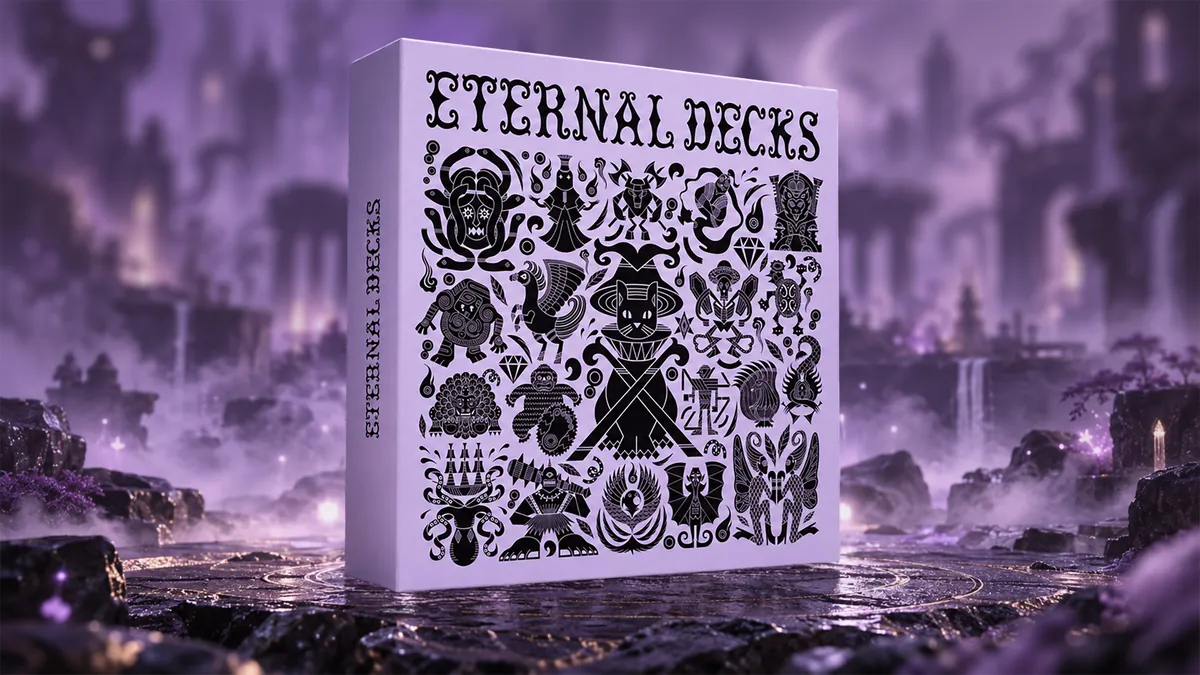
This cooperative game by Hiroken challenges you to solve a card puzzle while keeping everyone in the game. Its central question is easy to grasp: how do you keep a group alive when everyone uses up their cards at a different pace?
From a Japanese project to the Eternal World
Hiroken is the pseudonym of Hiroaki Yamamoto, whose game was originally published by Tricktakers Games. Its international journey included a Kickstarter campaign held between September and October 2024, which attracted 1,156 backers.
The adventure begins with a phenomenon that is shortening humanity’s lifespan. A group of explorers travels to the Eternal World to investigate what is happening and encounters the creatures that give the game its name.
The artwork by MUJUNSHA brings phoenixes, mermaids, witches, and other fantastical beings to life. There is a deliberate connection between the setting and the rules: Hiroken explains that the cards represent life energy and that the succession of turns expresses a cycle of life. When someone can no longer take an action, that cycle breaks.
Replenishing your cards comes at a cost
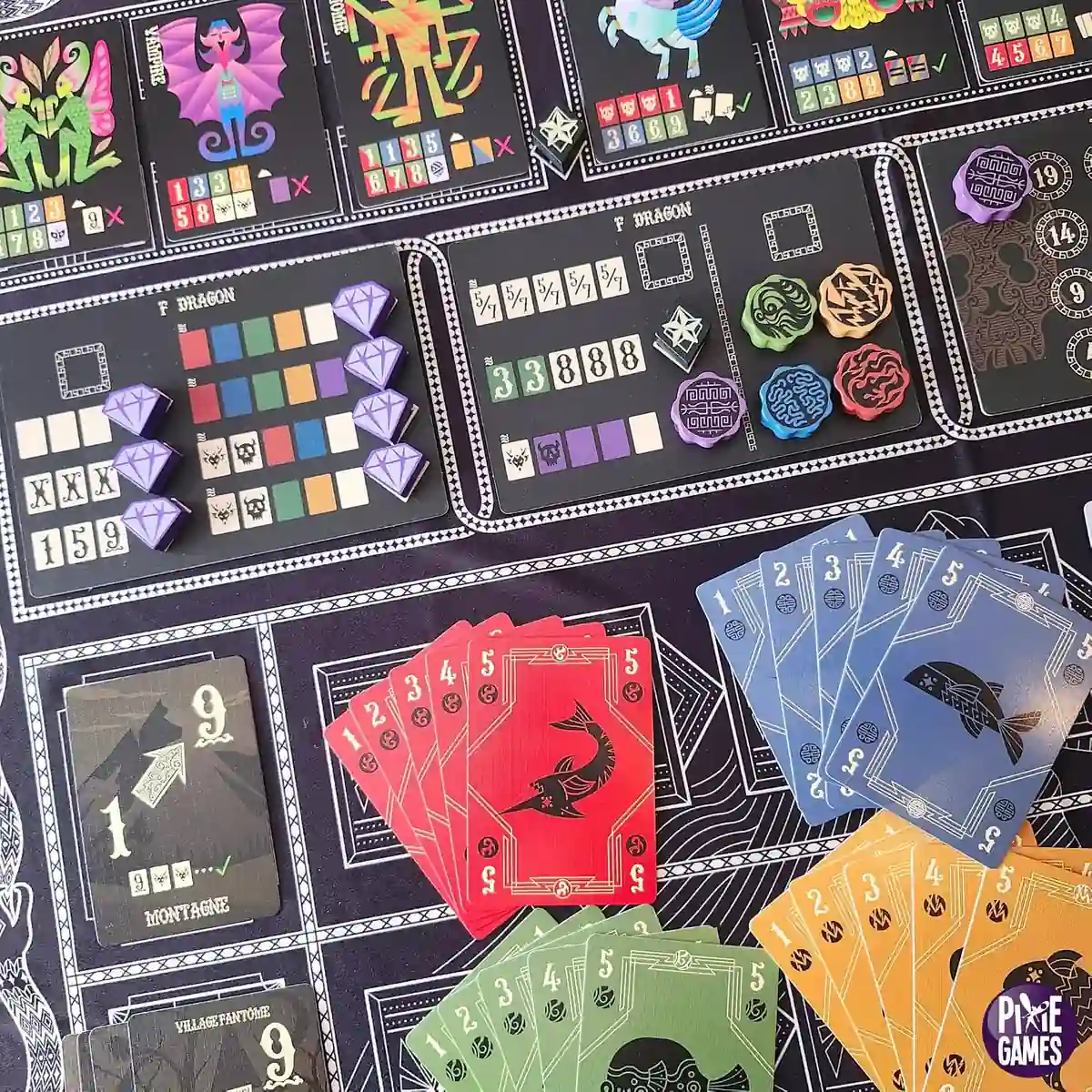
With four players, each player starts with a deck of five cards and draws three to form their hand. On your turn, you take one action: play a card, generate a jewel, or give a card to a teammate. Afterwards, you refill your hand from your deck, as long as there are cards left to draw. The discard pile is not automatically shuffled to start over; you need to acquire new resources before you run out of possible actions.
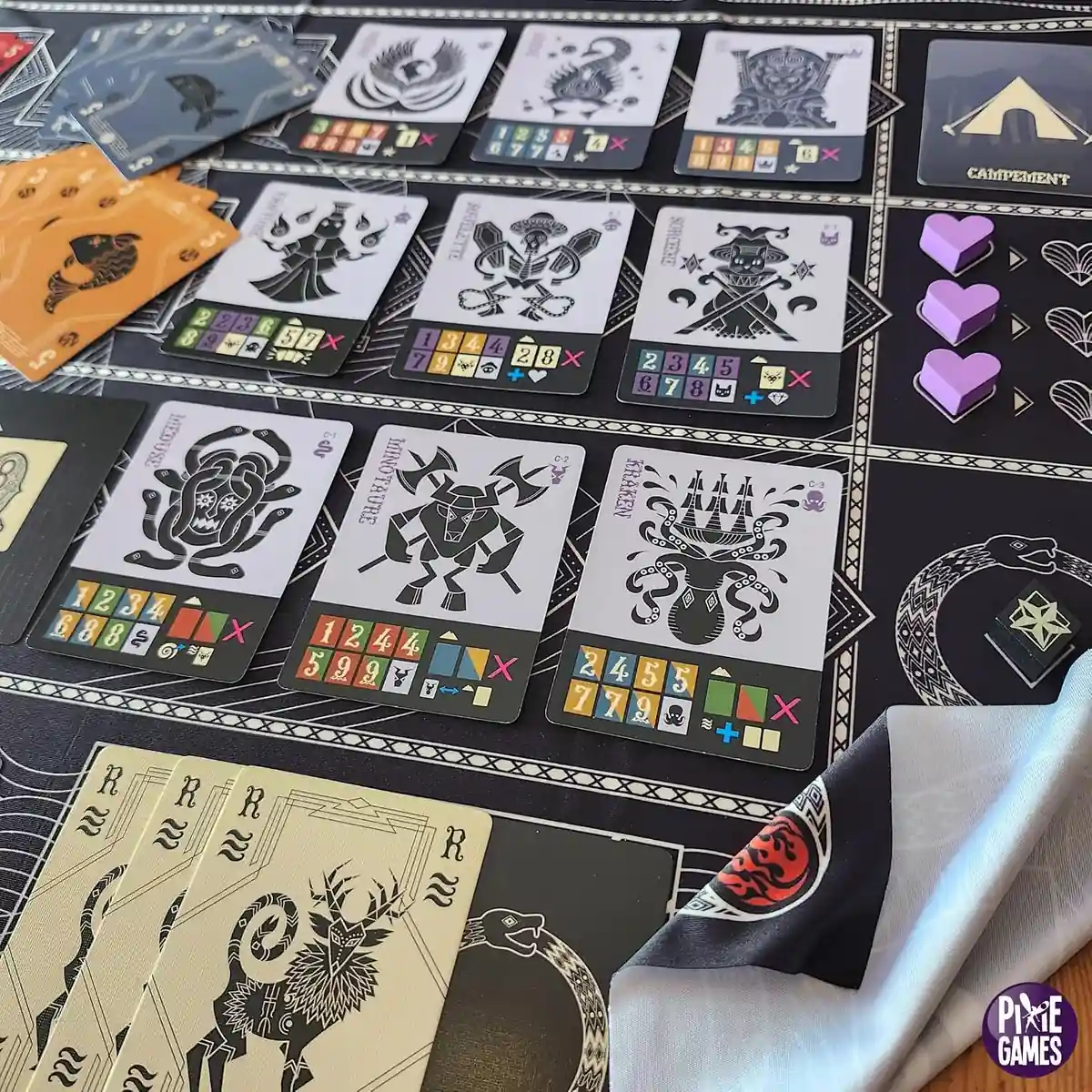
The field is arranged in three rows. As a general rule, two adjacent cards cannot share a number or color, and each row may impose additional conditions. Completing a row with an available Eternal lets you revive it and add the eight cards in its deck to the bottom of your own.
That encounter also activates a curse that affects the whole group. The Ghost, for example, prevents you from playing fives and sevens to the field. To lift the curse, you have to spend cards to generate a jewel. Replenishing your resources therefore creates a challenge for everyone: the group must decide who needs the next deck and which restrictions it can cope with.
Helping without revealing your hand
Communication has one specific restriction: you cannot directly reveal the numbers or colors of the number cards in your hand. You can discuss your plans, talk about curses, or point out who is close to running out of resources. Hiroken explicitly encourages conversation during play.
Each player has two communication discs they can place to indicate where they think they could play. They provide a way to signal a possibility without revealing the card that makes it possible.
Much of the game’s appeal comes from this. A nearly completed row may represent an opportunity for someone else, and playing in its next space changes what they will be able to do. These decisions require you to read both the board and other players’ intentions. If you enjoy cooperative games where each player holds information that the others must interpret, this is one feature to pay attention to.
Six stages that change the challenge
Eternal Decks includes six stages, labeled A through F, with different objectives and difficulty levels. The first teaches you how the game works; later stages introduce a ghost town, a labyrinth, and a confrontation with a Gatekeeper, among other situations.
The labyrinth features card-placement puzzles, while the Gatekeeper introduces an opponent who acts at the end of each round. These changes alter what you need to achieve with your cards and how you have to coordinate your efforts.
There is also a solo mode in which you control three golems, each with its own hand and deck. You can look at all three hands, so the experience focuses on managing their resources and planning sequences of actions. The discs serve a different purpose here: they let you draw extra cards a limited number of times.
What the North American edition brings
For English-speaking players, Portland Game Collective is the publisher behind the North American edition. It has announced improvements to rulebook clarity and color-blind accessibility, while aiming to preserve the original game’s visual identity.
Clear explanations are especially useful here: each card placement depends on the general rules, the row’s conditions, and any active curses. Understanding how those restrictions interact is part of learning the game, and deserves a clear explanation.
The game is designed for one to four players, with a playing time of 30 to 40 minutes and a recommended age of ten and up.
Our thoughts
We think Eternal Decks’ most appealing idea is turning individual resources into a shared responsibility. A card can bring the group closer to its objective, help lift a curse, or keep another player going. The design encourages you to notice what others need and leave opportunities for them, while every new deck opens up possibilities and adds challenges.
We are curious to see what conversations emerge when everyone knows the objective, but each player holds part of the solution. Perhaps the move you remember as you pack the game away will be the one where you left a space open so someone else could keep playing.