The Melody of Kaeru: D&D Among Giant Mushrooms and Pack Insects
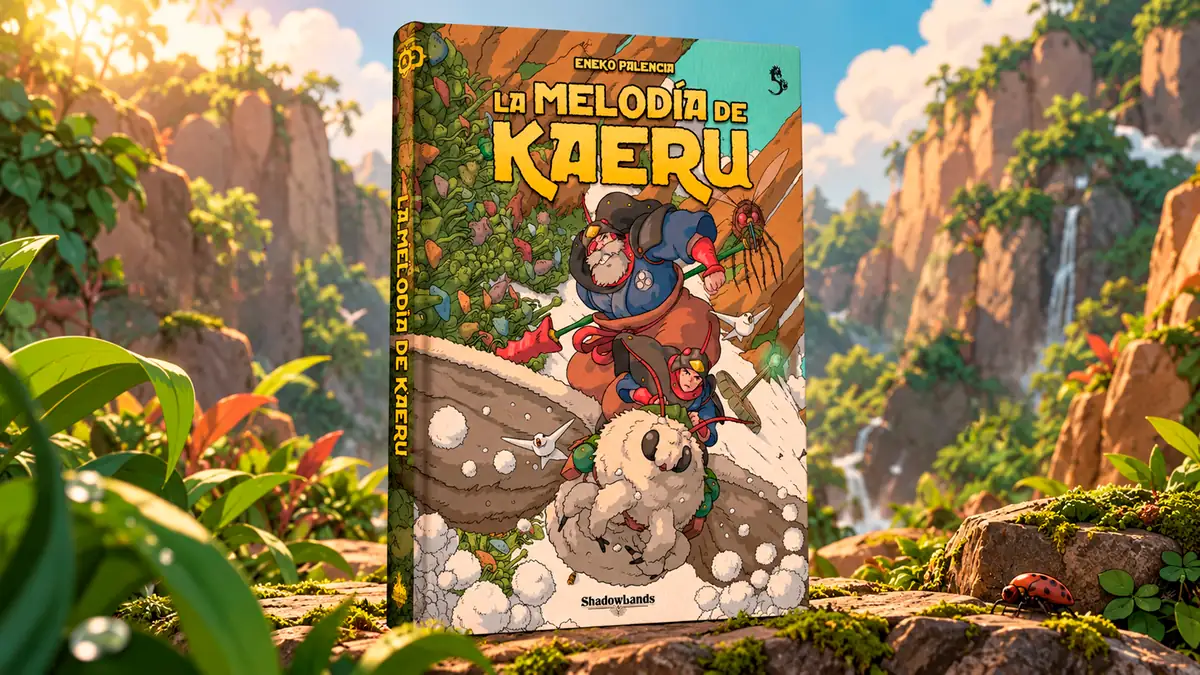
The cover of The Melody of Kaeru presents an image that is hard to mistake for anything else: adventurers crossing a landscape of colossal mushrooms, surrounded by creatures that seem to have stepped out of a naturalist fairy tale. The continent promises beauty, but also an environment that forces its inhabitants to learn new ways of living.
Eneko Palencia has created a campaign setting for D&D 5th Edition, compatible with both the 2014 and 2024 rules. Kaeru poses an intriguing question: what does a D&D adventure look like when the world surrounding the party (its ecosystems, customs, and even its music) shapes the fantasy?
A continent that learned to adapt
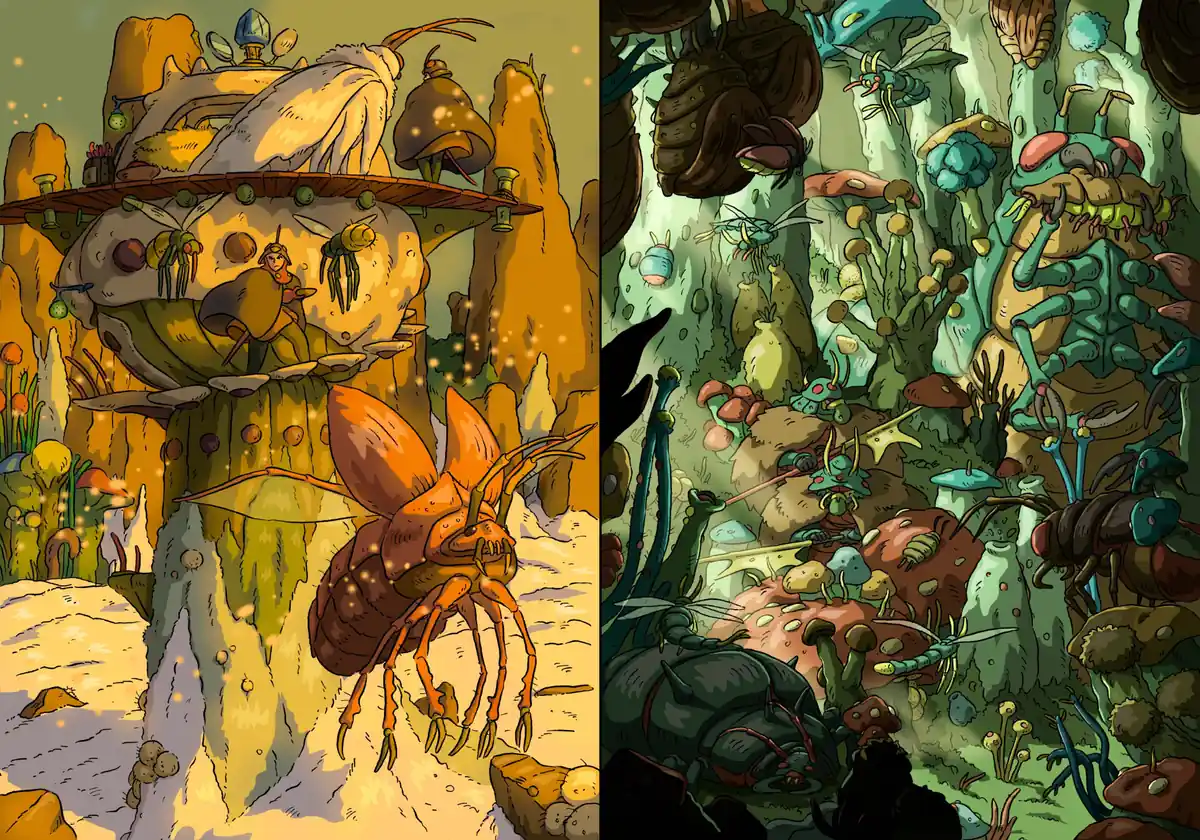
The Mushroom Forest was born after a catastrophe: a massive underground tremor caused almost the entire city of Fulgor to collapse, creating a crater whose mystery remains unsolved. Since then, the forest has spread across the continent. Its mushrooms and spores are lethal to most living creatures, although plants and insects survived and mutated until they reached extraordinary sizes.
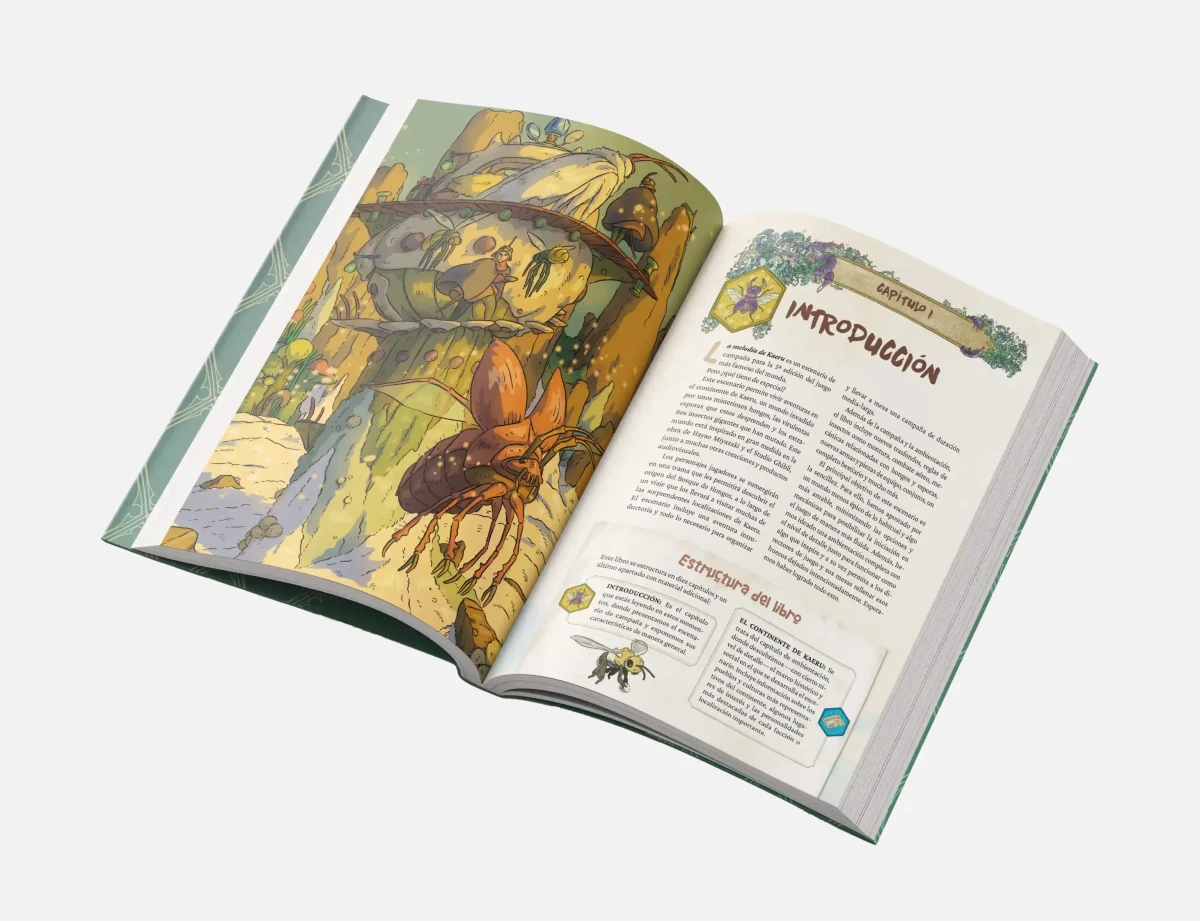
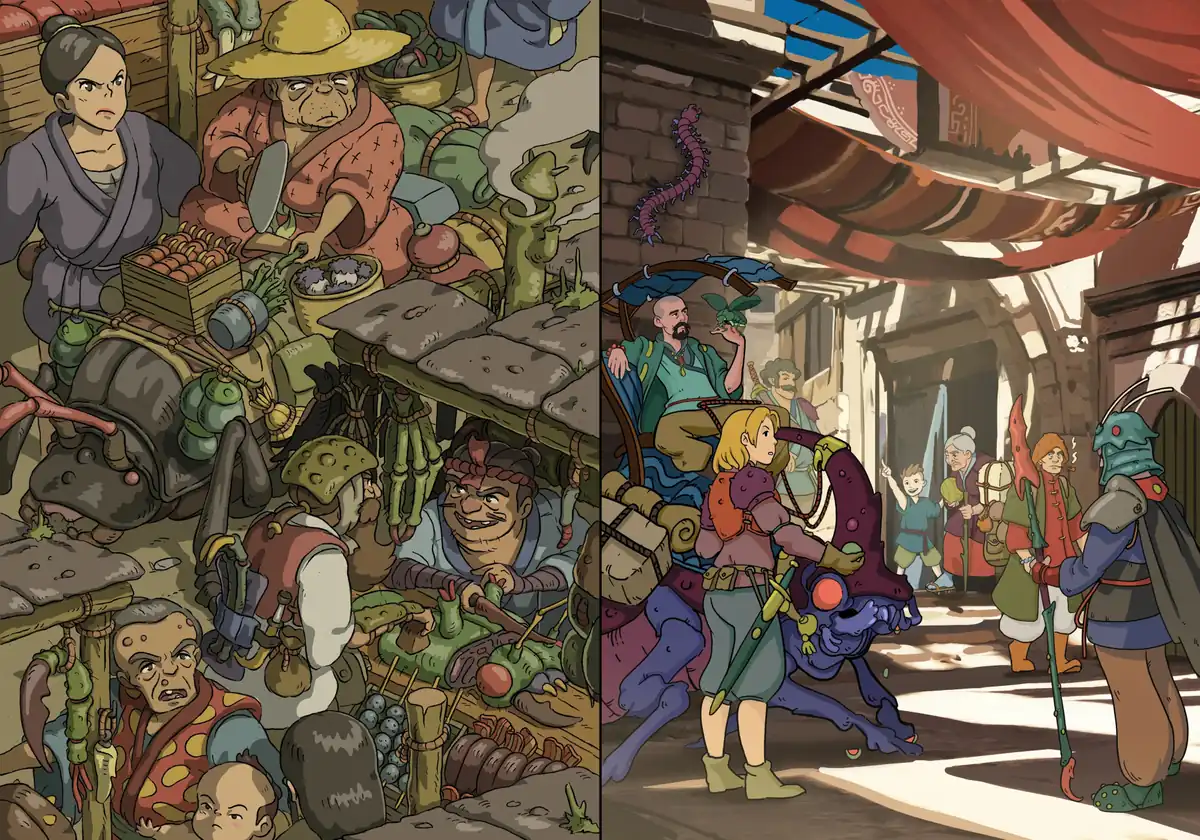
That transformation affects everyday life. Caterpillar caravans have replaced carts, and some flying insects are used as mounts. The inhabitants use mushrooms and insect parts to develop new forms of technology, while the environment that provides them with resources continues to threaten them. Kaeru’s aesthetic emerges from this coexistence between the strange and the ordinary.
The map also reveals dependencies between its communities. Alianza endures in the middle of the Sea of Spores, protected by its walls, but it cannot grow its own food. Grain arrives from Ámbar through Puertoruga; Brumaeterna supplies minerals, and Confín trades in parts from bugu, the mutated insects. Protecting a route or losing a caravan can affect an entire city.
Music is also part of the world
In Kaeru, magic is uncommon and is tied to music and the relationship with nature. Musicologists hide messages in their songs; druids can communicate with plants and animals. Music also distinguishes the different communities: each region has its own instruments, rhythms, and traditions.
The publisher points to the worlds of Studio Ghibli and Hayao Miyazaki as influences that may appeal to readers approaching the book. The comparison fits well with its combination of unusual creatures and storybook landscapes, although Kaeru adds a question of its own: what happens when a transformed ecosystem shapes the culture and survival of those who live within it?
There are specific details behind that idea. Alianza inherited Simazul’s tradition of string instruments; flutes can be heard in Ámbar, while drums are played in Tallogrís. The latter community has also preserved a spiritual tradition that has largely disappeared throughout the rest of the valley. At the gaming table, a song might hint at where someone comes from, carry a hidden message, or preserve the memory of an ancient belief.
A setting ready for the table
The book includes The Heartbeat of the Earth, a campaign that leads the party to uncover the origins of the Mushroom Forest, as well as more than 40 creatures, pregenerated characters, maps, game aids, and rules for riding giant insects and fighting in the air. According to Shadowlands, the design reduces the number of mechanical options to keep the game focused on the party’s stories.
The publisher presents it as a moderate-length campaign, aimed at players who enjoy playing characters from levels 1 to 5. The book contains more than 200 full-colour pages. For Game Masters, it brings together a campaign, locations, and adventure ideas; for players, it offers places and conflicts from which they can begin imagining their own stories.
There is an easy way to get a glimpse of Kaeru before bringing it to the table. Shadowlands offers the map, a character sheet, and five pregenerated characters as downloads: Bato, Maro, Ron, Sanda, and Tolka. The publisher also states that the supplement and the 5th Edition SRD rules are all you need to play. They are useful resources for gathering the group, looking over the map, and deciding where the journey might begin.
Our opinion
Kaeru catches the eye with its imagery, but its personality comes from the way those images connect with everyday life across the continent. Giant insects provide transport and sustenance; mushrooms are both threat and resource; music retains a special relationship with nature. This web of details gives its aesthetic a clear connection to specific experiences at the gaming table.
What especially appeals to us is its human scale: a caravan that must deliver grain to Alianza, a hunter returning to Confín with a valuable part, or a melody that has travelled farther than the person performing it. It remains to be seen at the table how the campaign and its rules play out, but the places and customs it presents already make you want to unfold the map and choose a path.
You may also like
News · Aug 3, 2026
Amazon is developing a new Warhammer 40,000 animated series based on Deathwatch

News · Sep 23, 2026
150 New Paints Aren’t the Most Interesting Thing About Tone Pro
News · Sep 1, 2026
The plastic Thunderhawk we've been waiting years for has finally arrived. The problem is, it can't fly.