150 New Paints Aren’t the Most Interesting Thing About Tone Pro
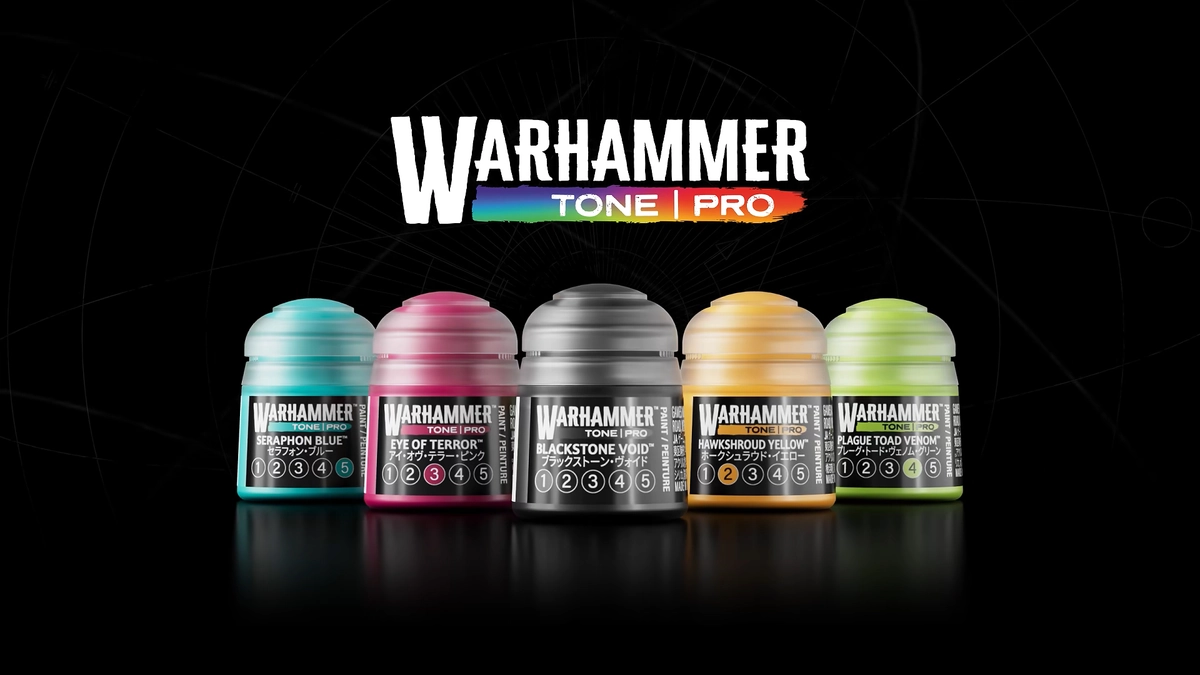
Painting your first miniature can feel fairly straightforward until someone tells you it is time to add highlights. You have applied the blue to the armour, there are dozens of paint pots in front of you, and the tutorial continues with an apparently innocent sentence: “now use a lighter blue”. The problem is knowing which one.
Warhammer Tone Pro arrives with 150 paints and some fairly ambitious promises about coverage, intensity and handling. But perhaps its most interesting contribution is much less technical: its colours are organised so that the range itself visually shows you which tone could come next.
The problem starts before the brush touches the miniature
Miniature paint ranges have spent years trying to make the physical side of painting easier. We have paints with better coverage, ready-made shades, technical effects and formulas that promise to need fewer layers. All of that can help, but there is still an earlier decision to make: choosing the right colours.
For an experienced painter, finding a shade and a highlight for a blue is relatively intuitive. They can also mix in black, white, another blue or even adjust the colour temperature. For someone starting out, a shelf full of fantastical names offers very few clues. Knowing that one pot has one name and another has a different one does not necessarily tell you that the two can form a coherent progression.
That creates a small barrier to entry that is easy to forget after years of painting. Learning how to move the brush takes time, but before that, you also have to learn how to look at colour.
Five tones turn the shelf into a staircase
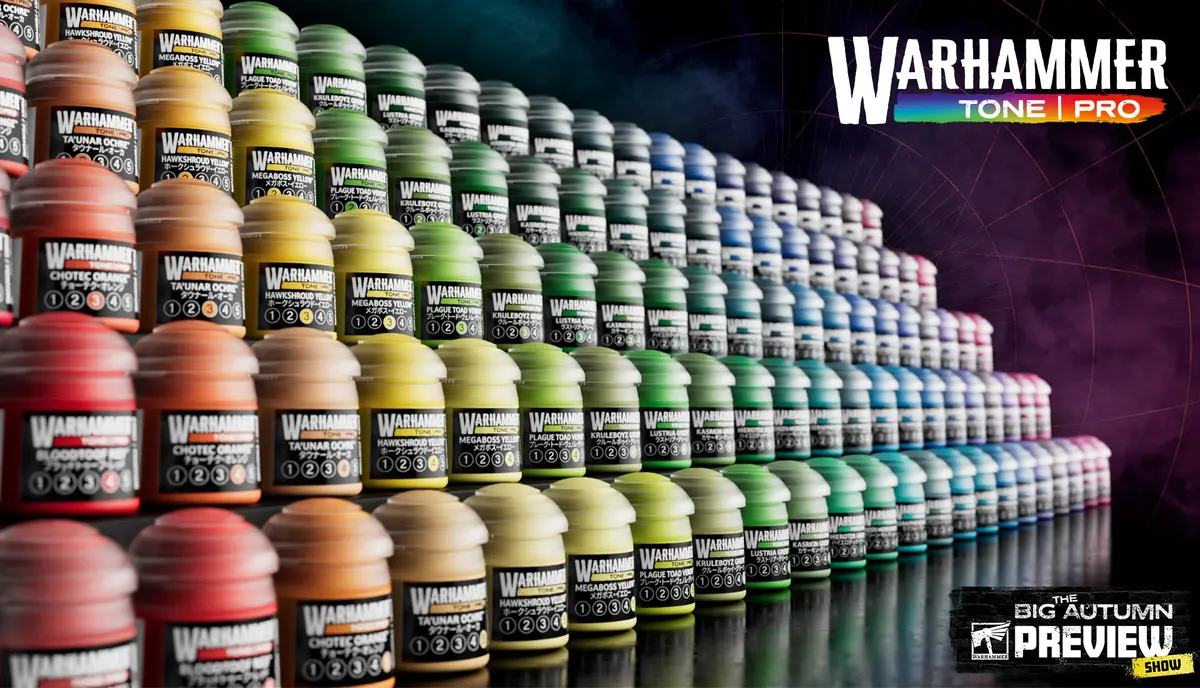
The structure of Tone Pro is extremely simple. According to Games Workshop’s official presentation, the range contains 30 different colours with five tones for each one, making a total of 150 paints. The tones are numbered from 1 to 5, with 1 the darkest and 5 the lightest.
That turns the pots into something resembling a small lesson in tonal value. If you have painted a surface using tone 3, there are two darker options and two lighter ones in front of you. Even before you know much about colour theory, you can begin to understand that a miniature gains volume when we reserve certain values for shadows and others to represent light.
That does not mean you always have to use all five. A combination of 1, 3 and 5 could provide a very direct progression, while using consecutive tones would allow you to build smoother transitions. The important part is that the relationship between the colours is no longer hidden behind their names.
The range can teach while you use it
There is something interesting about a product that manages to explain part of how it works through its own organisation. At inHobby, we have already asked what a Warhammer product can offer beyond its immediate function, and Tone Pro allows us to ask a similar question from the perspective of painting.
A traditional paint rack can present you with dozens of individual colours. Tone Pro also tries to show the relationship between them. For a veteran hobbyist, that may seem like a minor convenience, but imagine walking into a shop for the first time with a blue miniature in your hand. Choosing a shade and a highlight becomes much easier when the five related blues are arranged as an understandable progression.
That detail could be particularly important because Games Workshop occupies an unusual position at the entry point to the hobby. For a great many people, Citadel is the first miniature paint range they encounter. A shelf that can teach something about highlights and shadows has more potential than simply adding another 150 names to the catalogue.
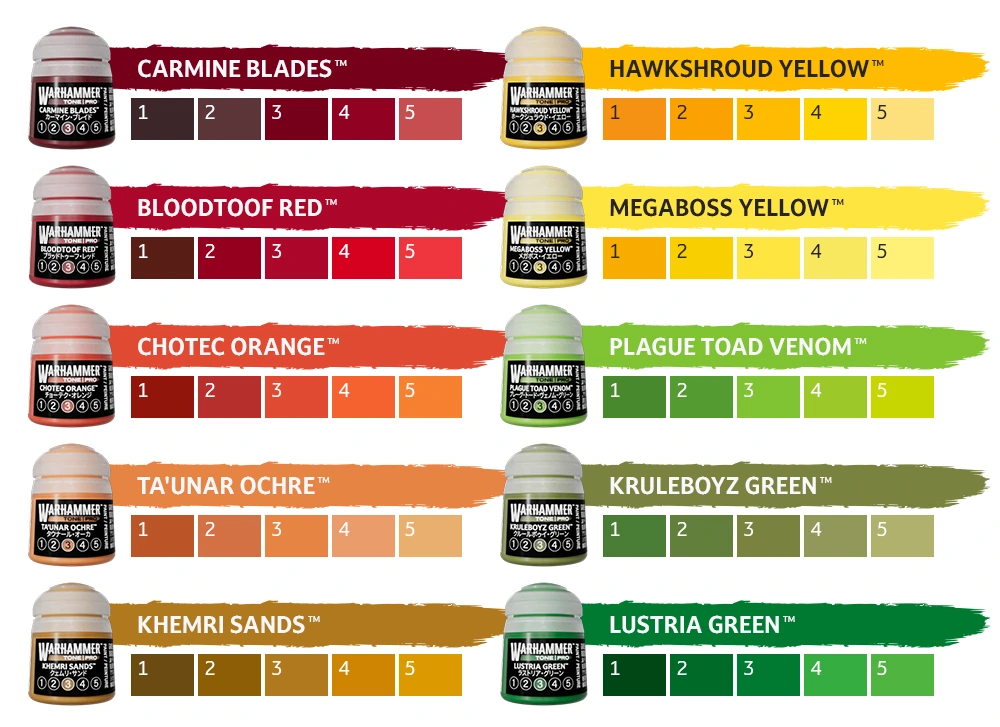
Image: Warhammer Community 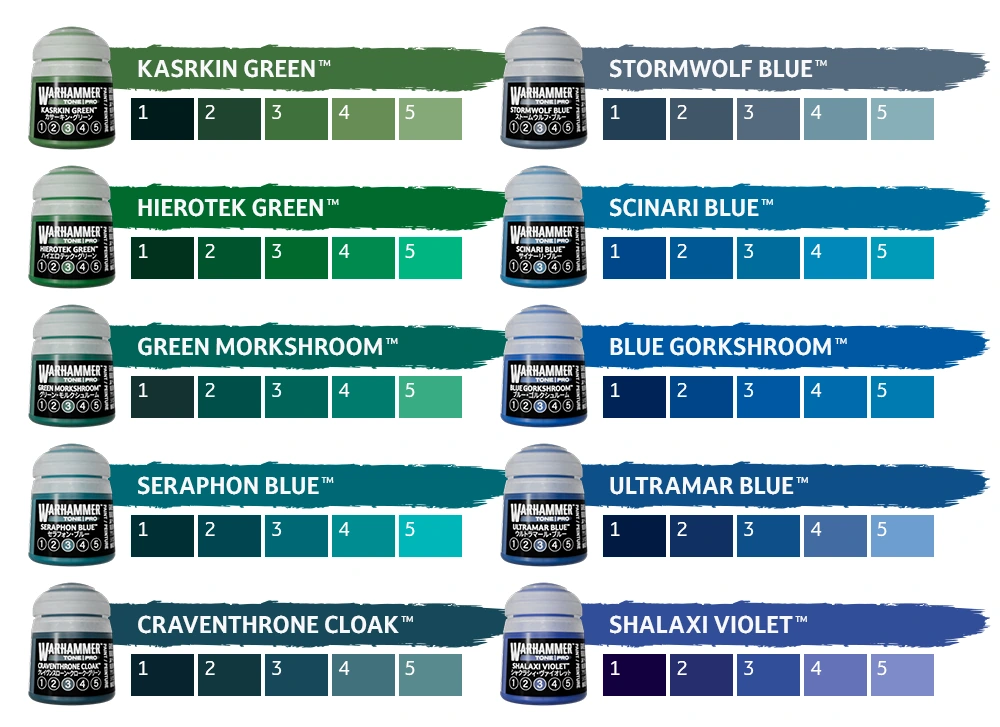
Image: Warhammer Community 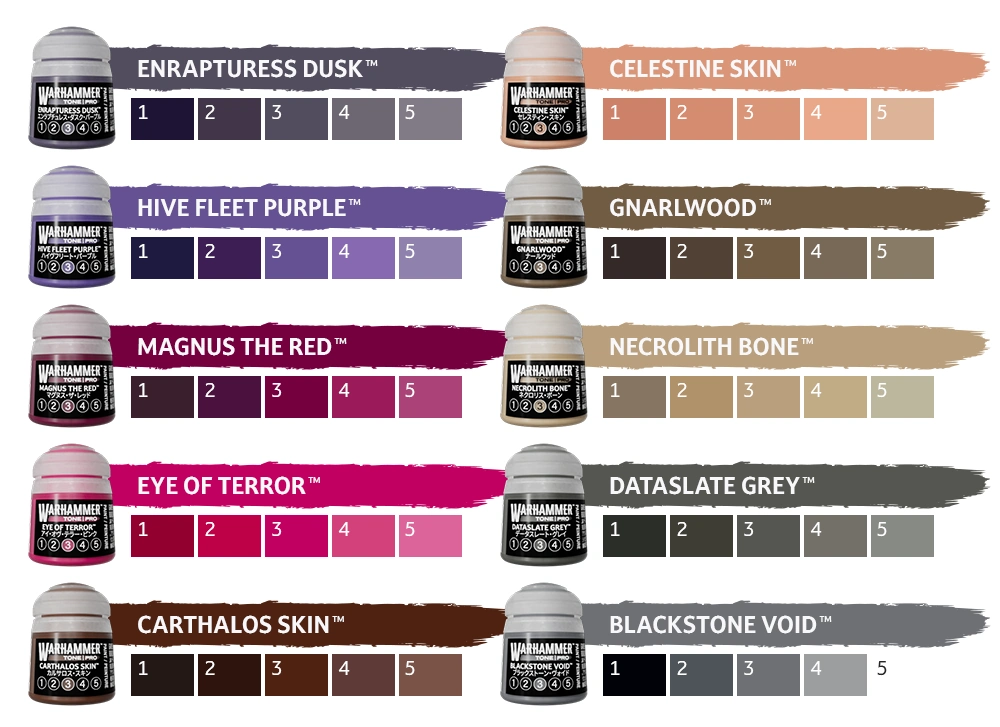
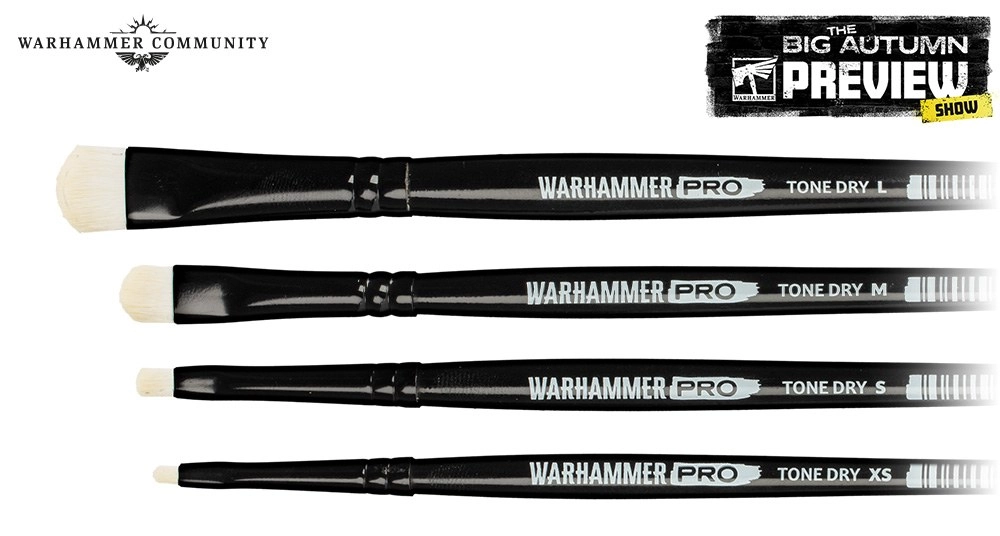
Image: Warhammer Community
The idea did not start with Tone Pro
Organising related colours from dark to light is not a Games Workshop invention. Other ranges have been trying to solve the same problem for some time through colour groups and ready-made progressions. The Army Painter, for example, uses its Flexible Triads within Warpaints Fanatic to group six related paints into a tonal progression.
That makes Tone Pro interesting for another reason. The question is not who came up with the idea first, but what happens when a structure like this enters the Warhammer ecosystem and is presented in an extremely simple way through numbers from 1 to 5.
In that sense, Tone Pro seems less interested in asking hobbyists to memorise a specific recipe and more interested in making a relationship visible. Dark, mid, light stops being an abstract explanation and becomes something you can see directly on the pots.
It may also teach a recipe too well
That simplicity comes with a trade-off. A five-tone scale makes decisions much easier, but understanding colour is not simply a matter of making it lighter or darker. A highlight can be warmer or cooler, we can reduce the saturation of a shadow, and two materials may need different treatments even when they start from a similar colour.
Nor do we necessarily need five pots to achieve five values. We can mix paints, skip steps or introduce other colours during the transition. Learning to mix is precisely one of those skills that, over time, allows you to do much more with a relatively small collection of paints.
Tone Pro may work best if we understand its five tones as scaffolding for learning, rather than five mandatory steps. First, you can visually discover why a progression works. Later, you can start modifying it, mixing it or abandoning it when the miniature calls for something else.
The possible price changes the conversation considerably
Games Workshop has not yet announced the official price of Tone Pro, but there is already a widely discussed estimate within the community. The starting point is the terms and conditions of the official Tone Pro giveaway, whose prize includes all 152 products in the range, including the two mediums, alongside Warhammer Pro brushes and tools.
One hobbyist used the stated value of the prize and subtracted the known price of the tools and brushes to estimate how much value Games Workshop had assigned to the paints. The resulting estimate is approximately €4.92 per pot, or €24.59 for a complete family of five colours. Other users have pointed out that the stated valuation does not include taxes and have suggested higher figures when translating it into a possible European RRP.
This needs to be stressed: it is neither a confirmed price nor a leak. It is a calculation made by hobbyists using the terms of a giveaway, and it does not allow us to determine what the price will be in euros or specifically in Spain. But it does raise an interesting question about the five-tone system. If buying a complete colour family ends up requiring a significant investment, it will be important that a tool designed to simplify painting does not accidentally suggest that we need five pots to paint a colour properly.

First impressions are promising, but they are still first impressions
Games Workshop has invited several experienced painters to try Tone Pro before the range reaches the public. Among them is Jon Ninas, known as Ninjon, who was particularly enthusiastic about the white and described it as the best miniature paint white he has ever used.
Albert Moreto Font, a three-time Slayer Sword winner, has also taken part. These are interesting first impressions, particularly because Games Workshop is highlighting the coverage of traditionally difficult colours such as white and yellow.
But it is still too early to turn those impressions into a technical judgement of the entire range. The tests are part of activities organised by the manufacturer itself, and most hobbyists have not yet had the opportunity to use the paints. That will begin to change on Saturday 26 September, when Games Workshop has announced demonstrations in thousands of Warhammer Stores and independent hobby shops. Until then, separating what looks promising from what has actually been demonstrated seems the most sensible way to approach Tone Pro.
Our opinion
The 150 paints are the number that grabs attention, but we do not think that is what makes Tone Pro genuinely interesting. What interests us much more is that someone can look at five pots and immediately understand an idea that we would normally explain through tutorials: a single colour can move through different values to build shadows, midtones and highlights.
Nor do we think five numbers are going to teach colour theory on their own. But they can provide a first map. And a good map is particularly useful when you have just sat down in front of your first miniature and still do not know the difference between being told you need “a lighter blue” and knowing exactly which one to pick up.
If Tone Pro ends up working that way, its greatest contribution may not be getting us to paint with 150 new colours. It may be helping some hobbyists better understand the ten or fifteen they actually use.