Age of Sigmar no longer needs to run from Warhammer Fantasy to have its own identity
For a long time, Age of Sigmar seemed to need to prove that it was not Warhammer Fantasy. Its early factions embraced new concepts, different names, and an aesthetic that did not always seek familiarity. Distance from the world that came before was part of its identity.
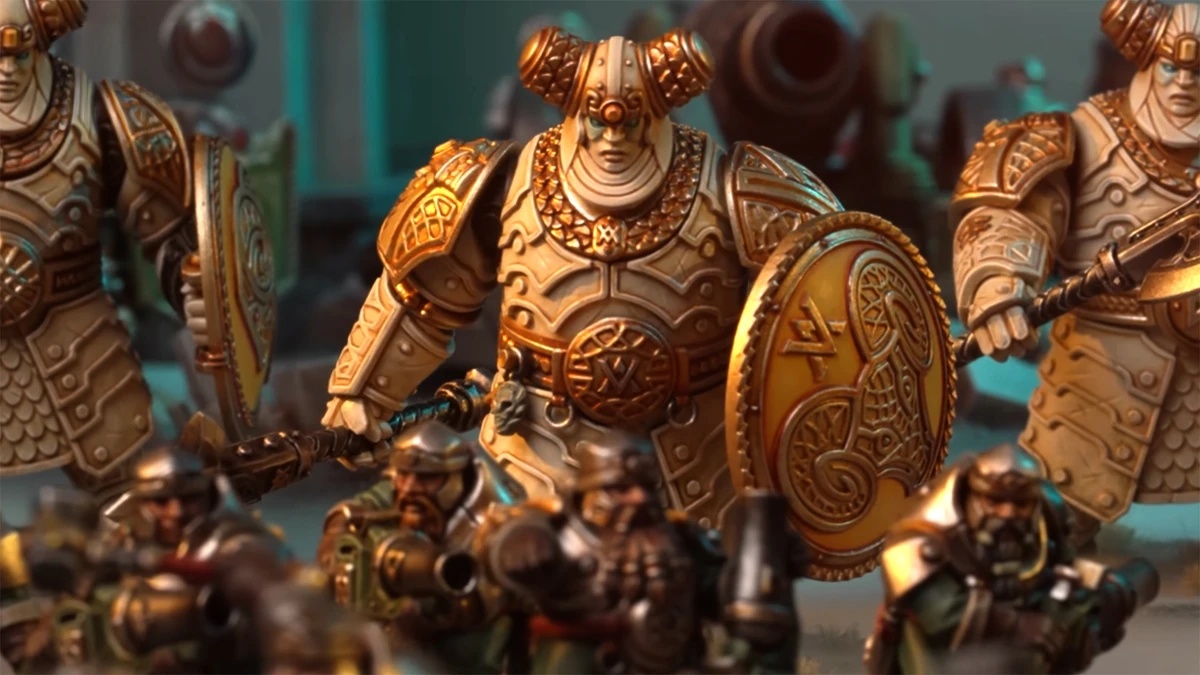
The Khazalite Holds present a different situation. They have karaks, runes, Ancestor Gods, firearms, and a duardin culture that is recognisable at first glance. But they also have stone Gholems, their own story of survival in the Mortal Realms, and a different relationship with the legacy they have inherited.
The question is no longer whether Age of Sigmar can resemble Warhammer Fantasy. The question is whether it has built enough of an identity of its own to allow itself to reclaim its roots.
Age of Sigmar needed to be different before it could begin
The early years of Age of Sigmar were defined by a clear break with the past. The End Times had brought the story of the Old World to a close, and the Mortal Realms needed to establish themselves as something more than a new setting for the same armies.
That was particularly significant for the duardin. The old dwarfs were divided between the Dispossessed, the Fyreslayers, and the Kharadron Overlords, three very different responses to the loss of their world.
The Dispossessed retained much of the classic imagery, but became tied to the Cities of Sigmar. The Fyreslayers transformed the dwarf archetype into a culture of tattooed warriors devoted to Grimnir and obsessed with ur-gold. The Kharadron imagined a future of sky-cities, technology, and trade.
The separation made sense. Age of Sigmar needed to prove that its factions could evolve. That search for an identity of its own can also be seen in the recent evolution of the Cities of Sigmar.
But it also left one question unanswered: what does a duardin culture look like when it is not simply a partial reinterpretation of the dwarfs of the past?
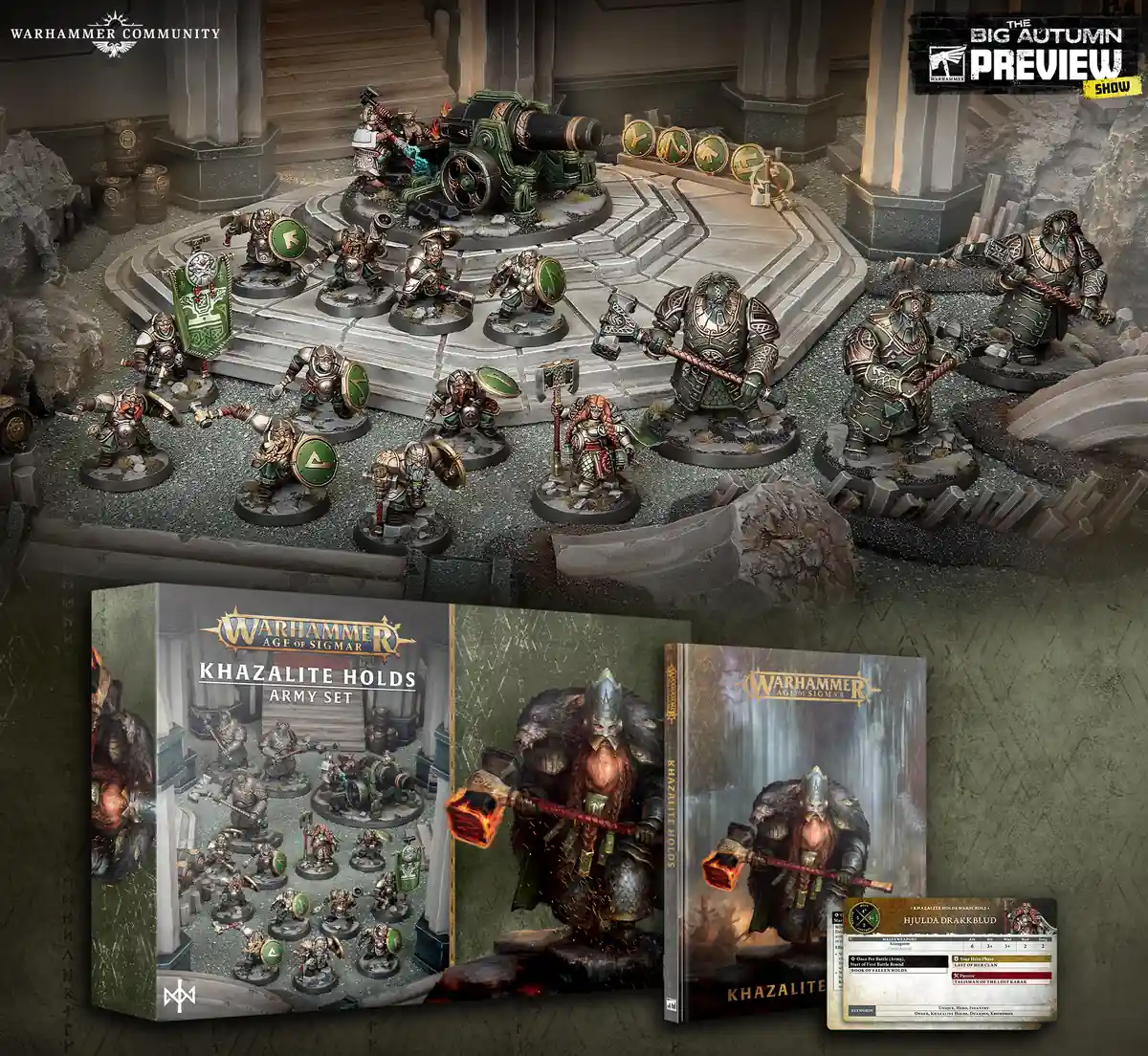
The Khazalites reclaim the past without simply repeating it
The official reveal of the Khazalite Holds brings back several classic elements very directly. They see themselves as guardians of duardin traditions, venerate the Ancestor Gods, and seek to reclaim ancient lost karaks.
Hjulda Drakkblud and her Clanguard embody that idea particularly well. They are not explorers searching for new territory, but descendants trying to return to homes that may no longer exist. Reclamation therefore becomes a central part of their identity.
Names with particular weight also return. Gazul is present once again through the Gholems of Gazul, stone constructs that stand guard over duardin tombs and answer mournful dirges of remembrance. Valaya appears as the ancestor of hearth and home, with her own Guardians and Gholems.
These elements recall classic dwarf imagery, but the way they are used belongs to Age of Sigmar. The Gholems are not simply war machines. They are part of a relationship with memory, the dead, and sacred places. Stone does not only represent resilience. It also represents what a culture refuses to forget.
The difference lies in the context.
The Khazalites are not trying to rebuild the Karaz Ankor or literally restore the world that was lost. They seek to found, defend, and reclaim their own holds across the Mortal Realms, a setting still filled with dangers and possibilities.
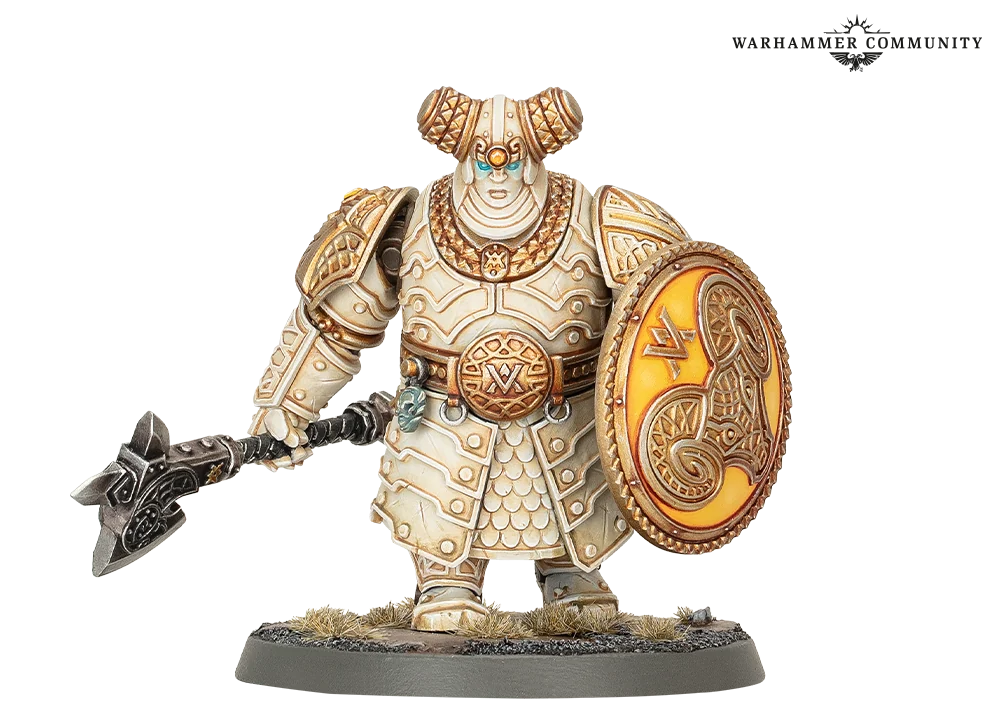
Image: Warhammer Community 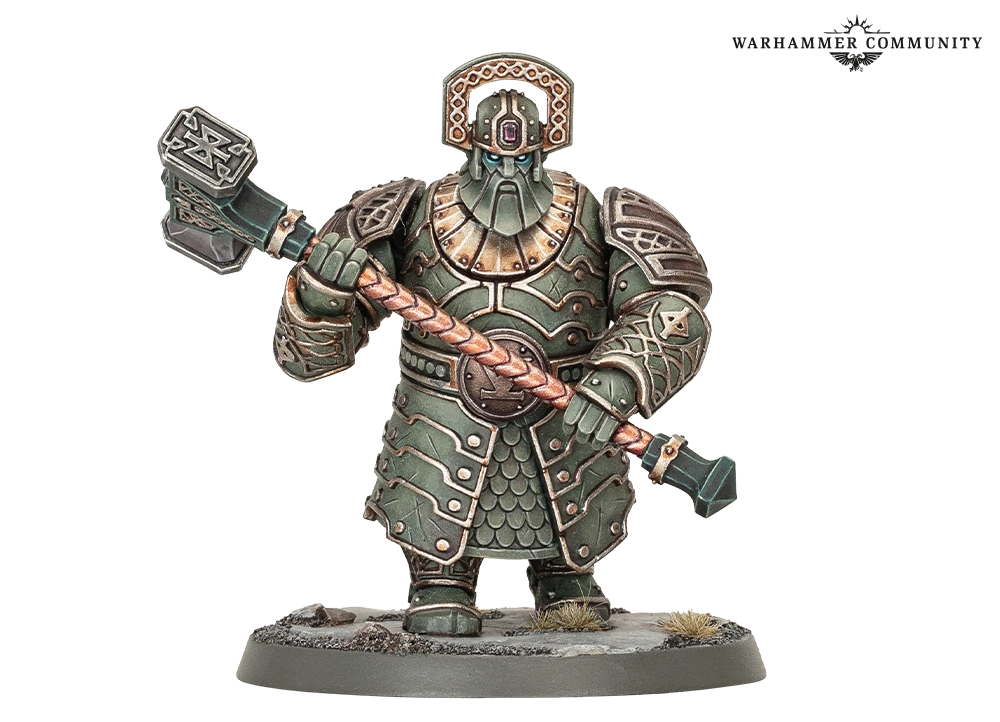
Image: Warhammer Community
A shared duardin identity is taking shape
Perhaps the most interesting part of the reveal is not any single miniature, but the way the Khazalites reshape the relationship between the different duardin cultures.
The new battletome will also include the Fyreslayers, who become part of this wider story under the name Grimmdron. Their situation is far from peaceful. Decades of attrition have worn down their magmaholds, while the attack on their spiritual capital has left them consumed by a need for vengeance.
That does not turn the Fyreslayers into Khazalites. They remain the descendants of Grimnir, with their own aesthetic, religion, and traditions. But they now share a broader framework with another duardin culture that looks towards the past from a very different position.
That opens up a rich narrative possibility. Age of Sigmar’s duardin can begin to explore not only what separates them, but what they still share: reverence for their ancestors, the importance of home, the memory of the gods, and the need to survive in a world that has changed.
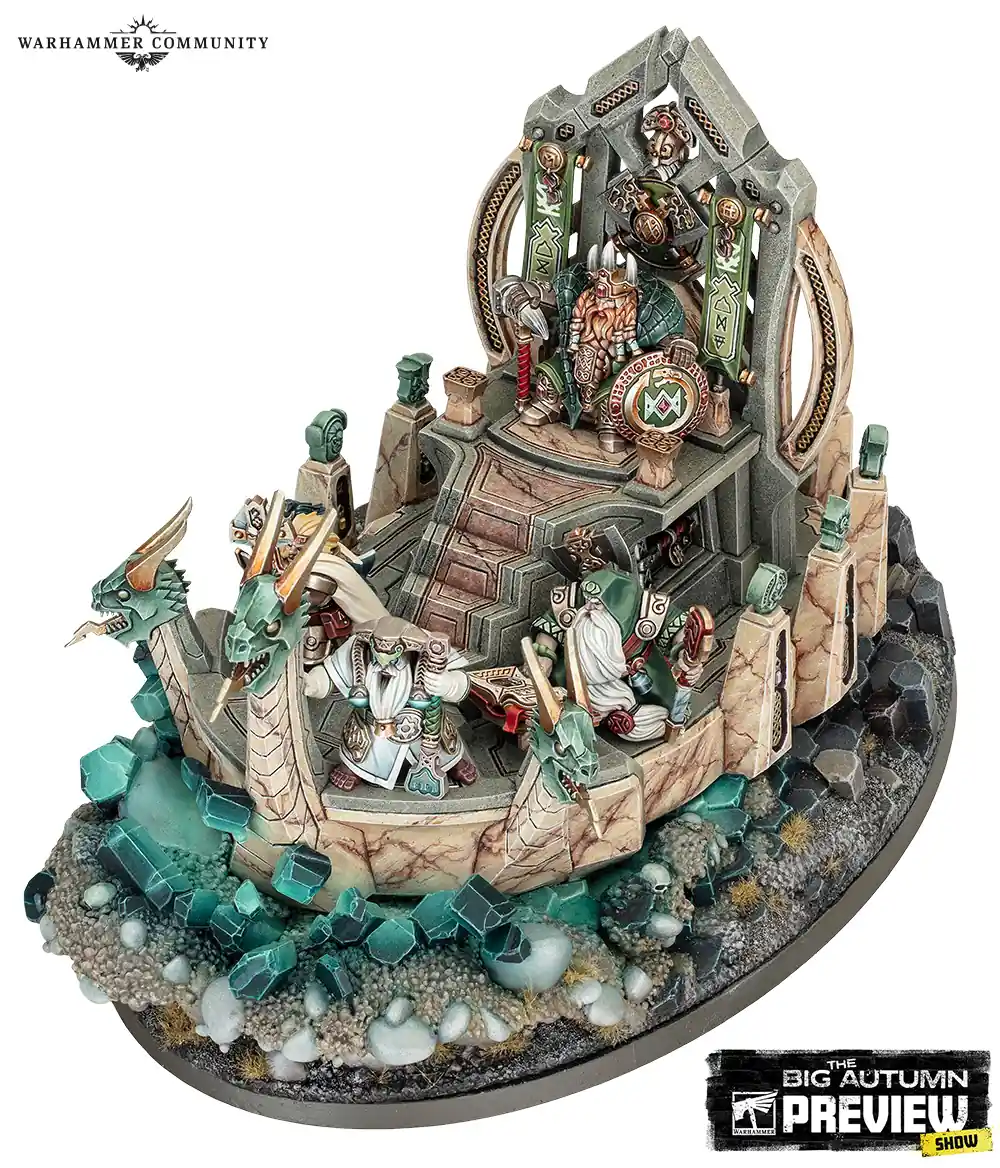
Grungni occupies an important place in that rebuilding. He is the one who crowns High Kyng Valankrom, supreme leader of the Khazalite Holds. His presence can also be felt in the faction’s technology, as though every weapon and every rune maintains a connection to the forge god.
It does not feel like a return to the old dwarf pantheon. It is a new way of using it.
Our take
The Khazalite Holds work because they do not try to hide their influences. There are karaks, runes, Ancestor Gods, and warriors armed with hammers. The faction understands that bringing back recognisable ideas does not mean becoming trapped in the past.
Age of Sigmar no longer needs to distance itself from Warhammer Fantasy to prove that it has an identity of its own. After eleven years, the Mortal Realms have accumulated enough history, geography, and conflicts of their own to reinterpret classic concepts without becoming a copy.
At the same time, Warhammer: The Old World has reclaimed its own space. Age of Sigmar can look back at that past, take familiar ideas, and transform them without needing to occupy exactly the same ground.
The key will be how the faction develops. If the Khazalites amount to little more than a collection of references to the dwarfs of old, their identity will quickly run out of room. But if their lost karaks, their gods, and their relationship with the Fyreslayers are used to tell stories of their own, they could become one of the fullest expressions of what it means to be duardin in Age of Sigmar.
What matters most to us is that nostalgia does not become the centre of the concept. Memory is the centre. And in a universe like this one, memory can be used both to reclaim what was lost and to build something new.