The Old World Is Starting to Solve Its Biggest Visual Clash: Miniatures From Different Eras in the Same Army
When Warhammer: The Old World returned in 2024, it did so with a rather unusual decision: putting completely new miniatures on the same tabletop as kits that some hobbyists had been using for more than twenty years. It was part of the project’s charm, but it also created contrasts that were difficult to ignore.
The new Tomb Kings of Khemri offer a glimpse of how that situation might evolve. Games Workshop is not redesigning the army from scratch. Instead, it is replacing some of the miniatures that showed their age most clearly while preserving the visual language that made the faction recognisable. The question is how far that renewal can go without erasing an important part of what we wanted to see return.
The Old World was deliberately born between two eras
From the beginning, Games Workshop made it clear that The Old World would mix new miniatures with models returning from Warhammer Fantasy. In 2023, it explained that new plastic and resin releases would join a range of “resurrected and revitalised” miniatures from previous editions. This was not a temporary solution hidden away in the catalogue, but part of the game’s approach. The company itself openly discussed this combination before launch.
The Tomb Kings were probably the clearest example. Their launch box included a huge, completely new Liche Priest on Necrolith Bone Dragon alongside other units drawn from the classic range. The skeletons and cavalry had originally appeared in 2003, when the Tomb Kings received their first dedicated miniatures during the sixth edition of Warhammer Fantasy.
That contrast is also part of The Old World’s current identity. If you’re building one of these armies, you might find yourself painting a sculpt designed with modern tools and placing it beside another conceived when Warhammer Fantasy was at a very different point in its history. Our guide to getting started with The Old World was already built around this idea of putting these armies together gradually.
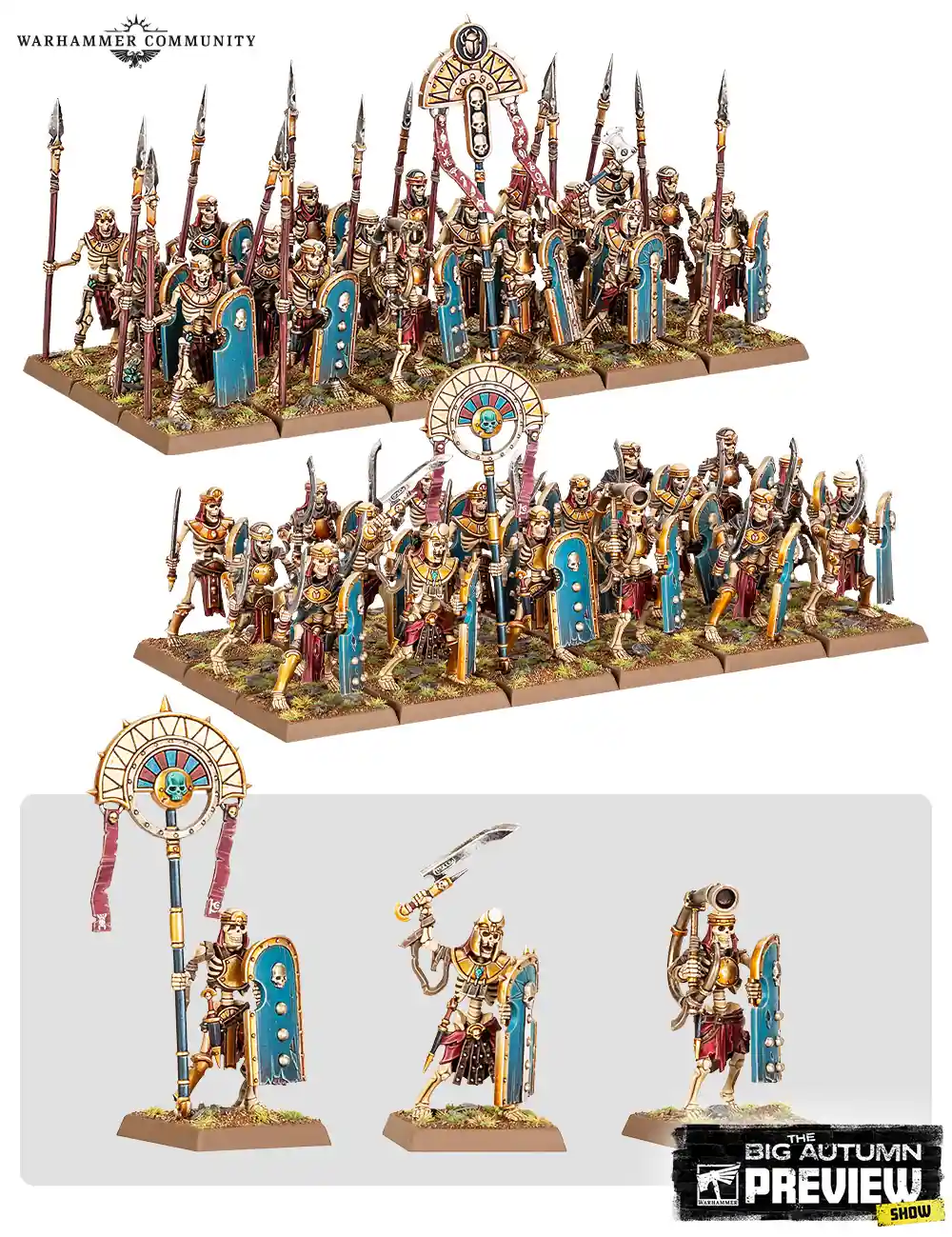
The skeletons were the most obvious place to start
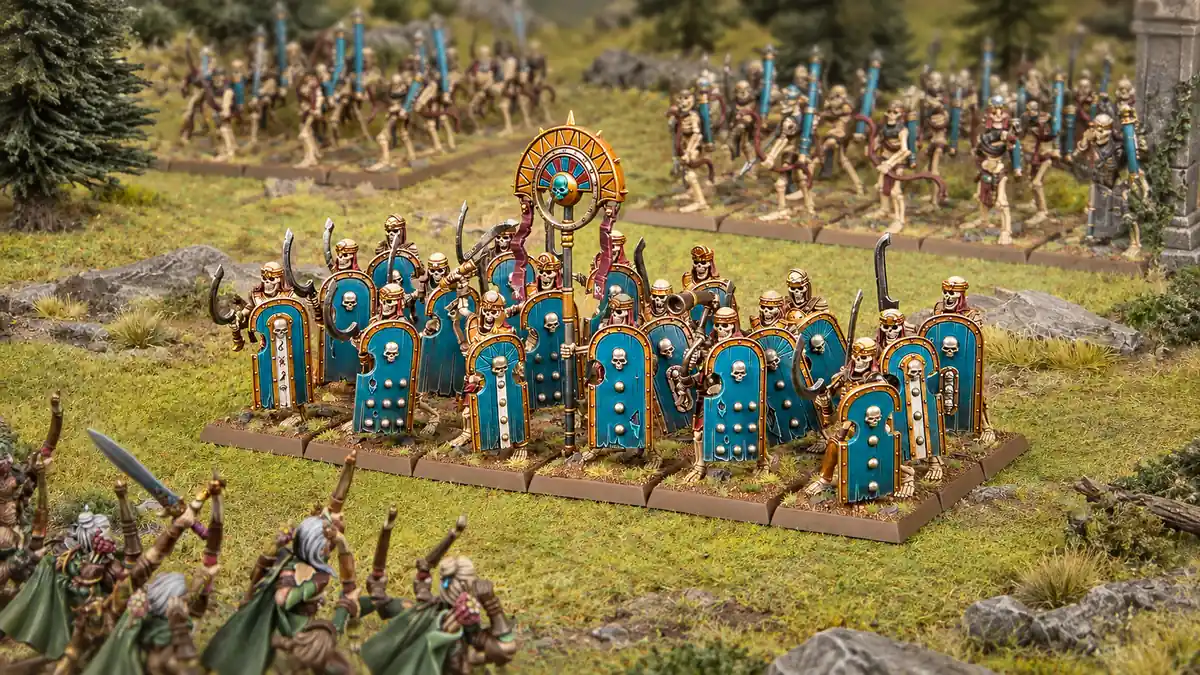
The new Tomb Kings revealed at the Big Autumn Preview address that contrast directly. The Host of Nehekhara Army Reinforcement Set contains 78 completely new plastic miniatures: 36 Skeleton Warriors, 36 Skeleton Archers and six Skeleton Chariots. These are not characters designed to stand out among the ranks. They are precisely the miniatures that make up much of the army’s visual mass.
The historical difference is considerable. The previous Skeleton Warriors and Skeleton Horsemen came from the range released in 2003, and the old Skeleton Chariots also appeared that year. Games Workshop brought them back for The Old World in 2024 much as hobbyists remembered them. Two years later, the Warriors, Archers and Chariots are finally receiving modern replacements.
That matters particularly in an army built around regiments. An old character can be charming precisely because it looks like a piece from another era, but thirty or forty core miniatures determine how we perceive an entire collection. Replacing the core allows the Tomb Kings to look considerably more modern without having to replace every miniature in the range.
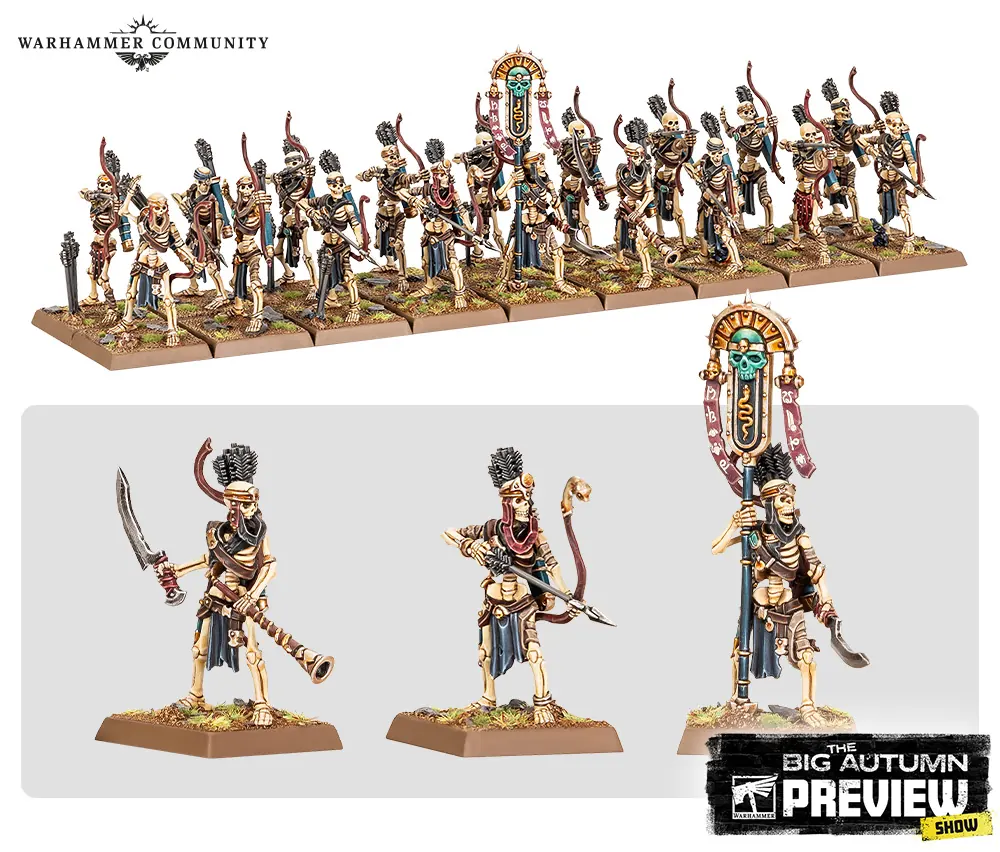
New miniatures, the same army
What is interesting is that Games Workshop does not seem to have used this renewal as an opportunity to reinterpret what the Tomb Kings are. The new Warriors still march in ranks with shields, spears, khopesh-style swords and the funerary iconography of Nehekhara. The Archers retain that image of silent legions raised from their tombs, while the Chariots remain the light, ornate vehicles that have always been a central part of Khemri’s identity.
The modernisation is mostly in how that idea is expressed. There are interchangeable heads, quivers and shields, command options and small scenic details such as scarabs or arrows embedded in the ground. The poses and proportions can also benefit from more than two decades of evolution in miniature design without needing to turn the skeletons into something fundamentally different.
That is an important distinction. Modernising a classic faction does not necessarily mean reinventing it. The Old World can preserve the silhouettes, symbols and concepts we recognise while gradually updating the way they are represented. We have already seen a similar philosophy with Bretonnia, where Games Workshop described its new miniatures as designs intended to fit the classic visual language while taking advantage of modern technology.
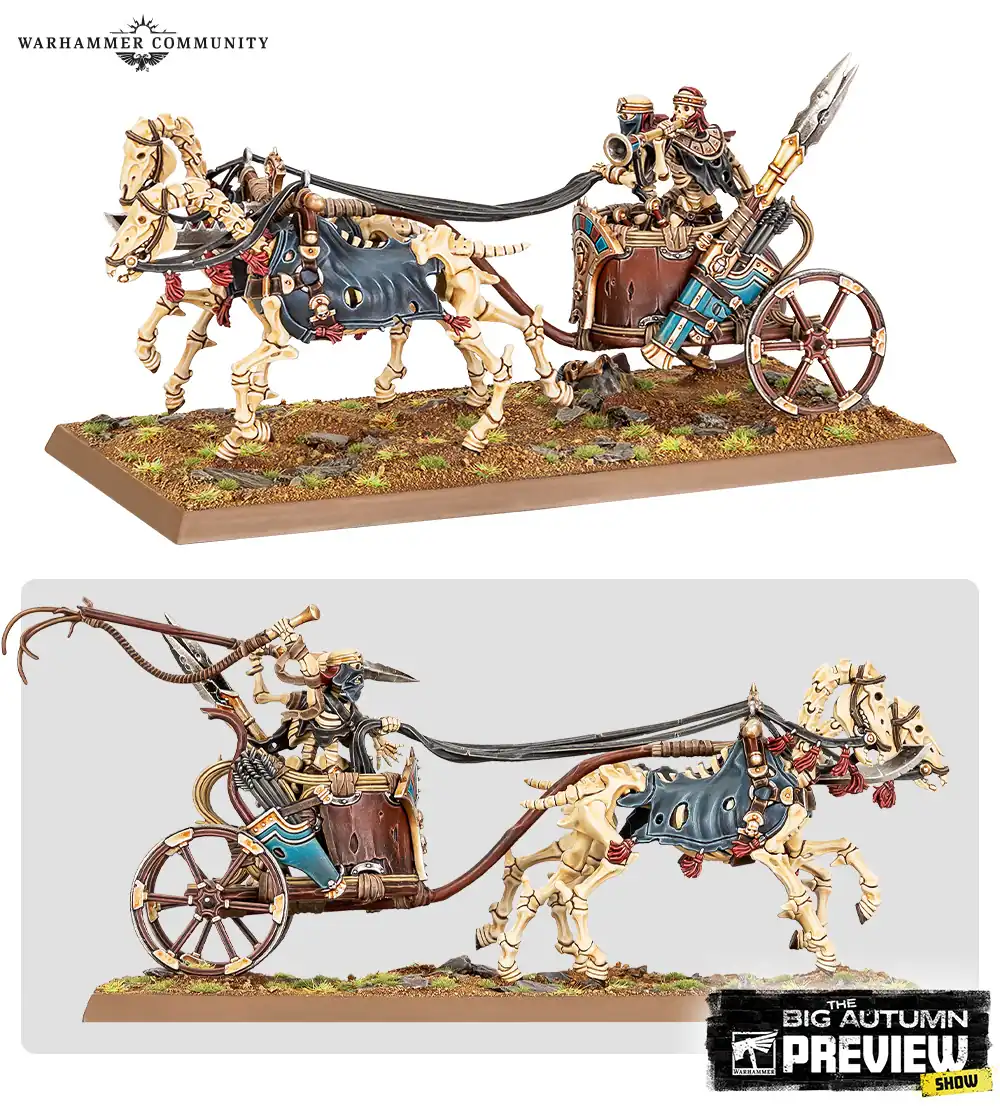
A slow renewal may be exactly what The Old World needs
The Tomb Kings are not an isolated case either. Bretonnia combined veteran regiments with new Knights of the Realm on Foot and modern characters from launch. The Dwarfs brought back numerous historic kits alongside new Dwarf Lords, while the Warriors of Chaos later received new Marauders replacing another set that was showing its age. What seems to be emerging is a gradual renewal rather than a complete reconstruction of the ranges.
That still leaves visible differences. The Tomb Kings themselves retain Skeleton Horsemen based on miniatures originally released in 2003, while other parts of the collection belong to later generations of Warhammer Fantasy or the current era of The Old World. We do not know which kits will be replaced next, nor is there a public roadmap that allows us to assume every veteran miniature will eventually receive a new version.
But perhaps that uncertainty is inseparable from the project. The Old World exists because Games Workshop decided to physically return to part of its history, rather than simply bringing back its names and background. Replacing all those miniatures immediately would have created much more visually coherent ranges, but it would also have made the return into something quite different. Choosing an army for The Old World still means, in some cases, accepting that you are collecting several eras of Warhammer at the same time.
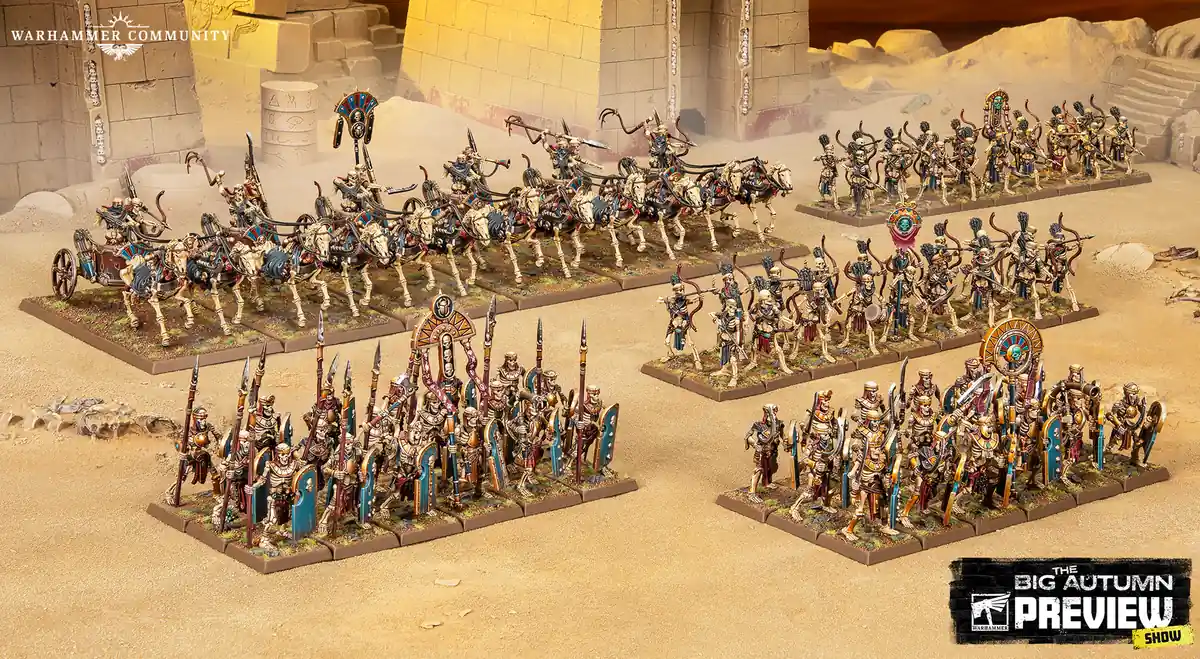
Our opinion
We like the direction suggested by these Tomb Kings because it seems to strike a fairly delicate balance. The old skeletons had obvious historical value, and there will be collections where they continue to fit perfectly, but they were also one of the places where the more than twenty years separating different miniatures were most noticeable. Updating those large units first can make the entire army feel more coherent without having to erase its past.
We also think The Old World would lose some of its personality if all its ranges were replaced at once. There is something appealing about bringing an old miniature back, placing it beside a newly designed one and discovering that both belong in the same army. The key is making that mixture feel like a collection built across the history of Warhammer rather than simply a catalogue caught halfway through an update. The new Tomb Kings suggest that both things can coexist.