Horror on the Orient Express: how the board game combines deduction and survival
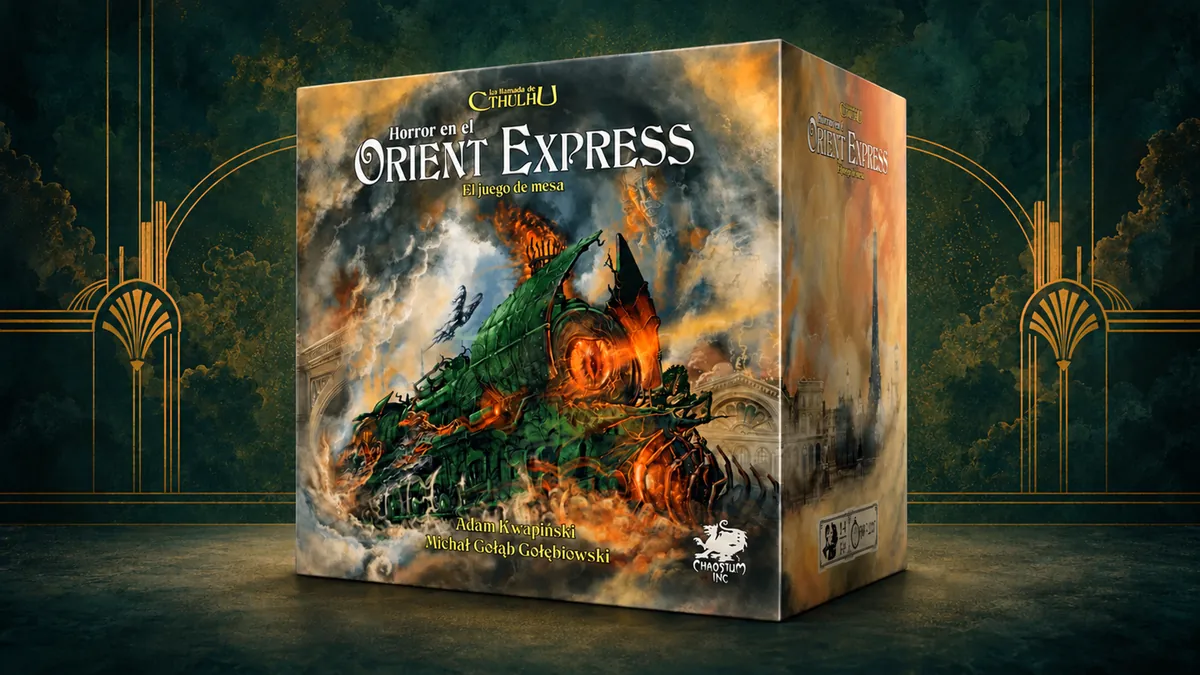
A passenger knows something about the man in first class. Talking to him might help clear up a suspicion, but someone in another carriage is on the verge of losing their temper. Beyond the windows, creatures are approaching that should never come anywhere near a passenger train. The Orient Express has become trapped in the Dreamlands. Even under these circumstances, it keeps moving.
Horror on the Orient Express: The Board Game brings together investigation and survival around a very specific challenge: finding enough time to discover who is behind the disaster while keeping everyone aboard alive. With its US retail release approaching, it’s worth examining the decisions this cooperative game presents and just how much responsibility players will need to share.
A train trapped in the Dreamlands
Published by Chaosium and designed by Adam Kwapiński and Michał Gołąb Gołębiowski, the game takes us on a journey through the 1920s that has somehow left reality behind. The scenery changes as the train travels through the Dreamlands, while portals, monsters, and a vampire threaten everyone aboard. Each Investigator has different abilities to help deal with the situation.
All players work together and can freely discuss their plans. Potential cultists are hidden among six Suspects controlled by the game, each with clues that we’ll uncover throughout the journey.
Victory requires reaching the end of the route and correctly identifying which Suspects are cultists and which are innocent. A single incorrect identification causes the entire group to lose. We can also fail much earlier if an Investigator dies or loses their sanity, too many passengers are killed, or the escalating threats exhaust the available components. The mystery unfolds alongside several other ways for everything to go wrong.
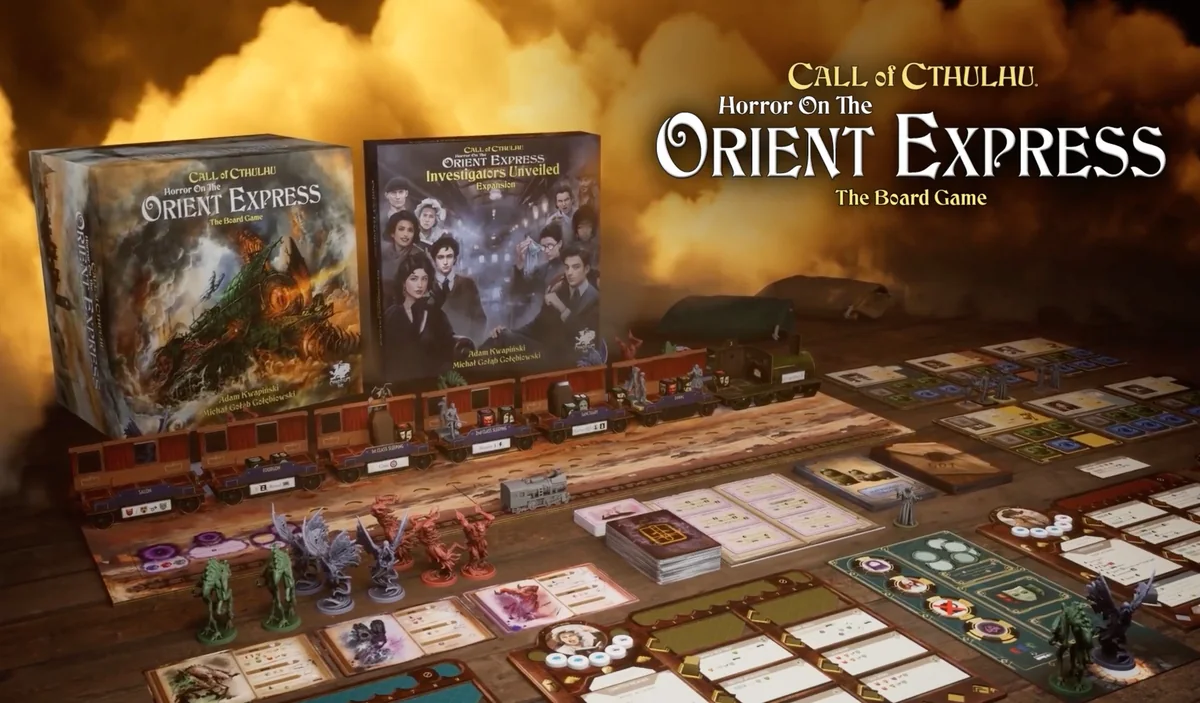
Investigation means deciding how much to risk
Conversations are resolved using a bag of tokens. An Investigator’s skill determines an initial draw that helps prepare the conversation. From there, we can keep drawing tokens to collect matching information and earn rewards. Knowing when to stop is an essential part of the investigation. A conversation fails if we draw a split token whose penalty matches that of another split token already drawn. When that happens, the penalty takes effect, but we receive no rewards or clues. Players can also choose to stop earlier and secure what they’ve earned.
The clues concern each Suspect’s ticket, desires, and features. Their combination determines whether that character belongs to the cult according to specific conditions. We need to connect what we know about each person and decide which pieces of information are still worth pursuing.
This gives every conversation a different purpose. Perhaps a clue about an object will complete a deduction, or perhaps it’s better to investigate someone we know almost nothing about. Suspects can also offer favors and quests, meaning they may help us long before we understand their true intentions. The rulebook even includes consequences for completing a quest given by someone who later turns out to be a cultist. Trust therefore becomes a decision with tangible effects on the game.
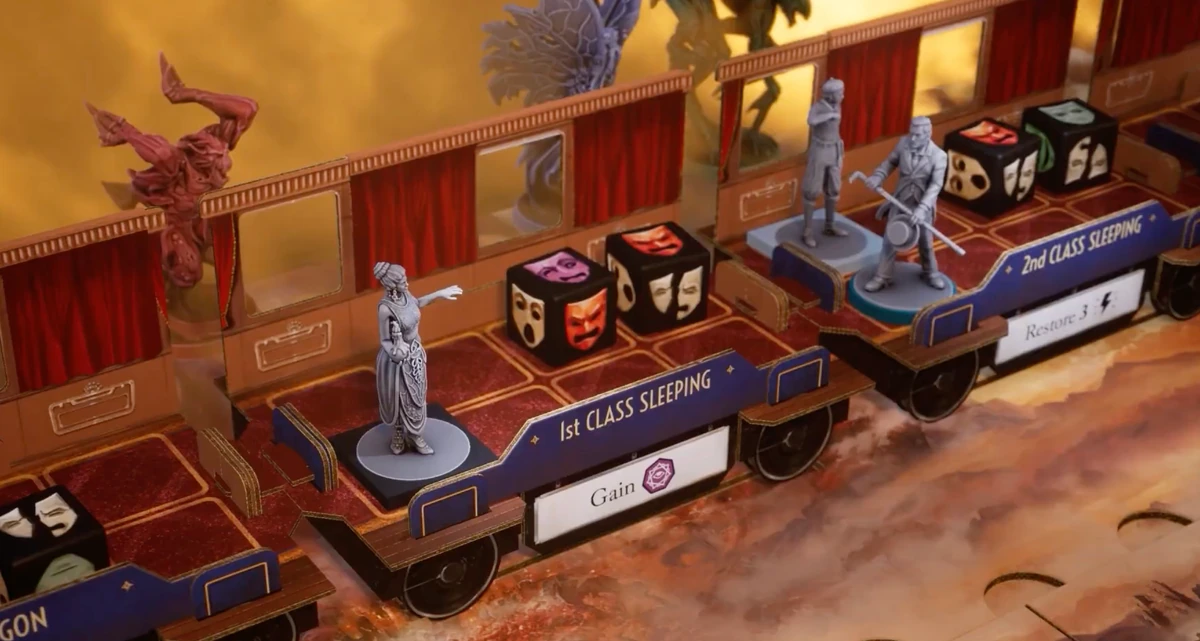
The train keeps moving as we juggle priorities
On each turn, we perform one Main Action and up to two Basic Actions, in whichever order we prefer. Events then unfold, and the train moves forward. This sequence places a limit on the time available for investigation: spending a turn gathering information means leaving other tasks unfinished. Monsters demand attention, portals accumulate Essence, and the vampire searches for victims among passengers whose changing conditions we must also manage.
Used skills remain exhausted until we Rest. Resting restores Stamina, makes those skills available again, and provides opportunities to improve our character through Experience. Choosing when to stop and recover affects both what we can accomplish on the following turn and which immediate problems we’re leaving unresolved.
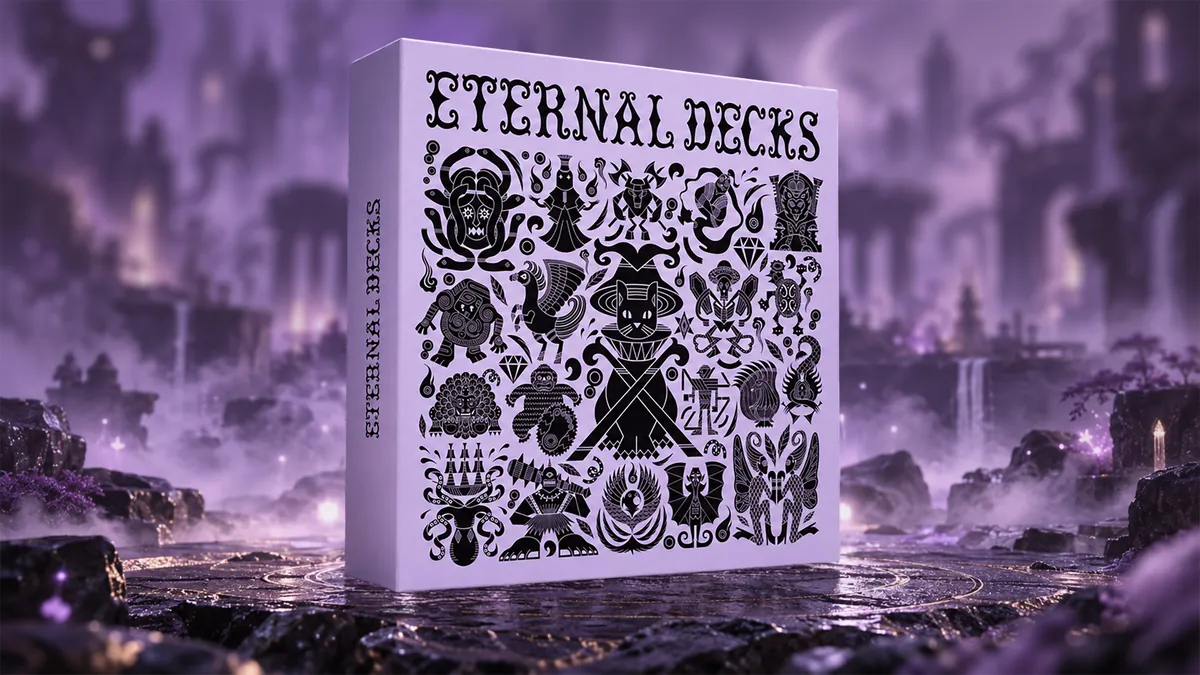
From our reading of the rules, cooperation seems to revolve around negotiating priorities. When a carriage is in trouble, the group must decide who is best equipped to intervene and which task can wait. We saw a similar sense of shared responsibility in Eternal Decks, where the cards available to each player influence everyone’s ability to keep going. Here, that responsibility takes the form of specific people and places: the Investigator who needs to recover, the passenger asking for help, or the clue still waiting to be uncovered in first class.
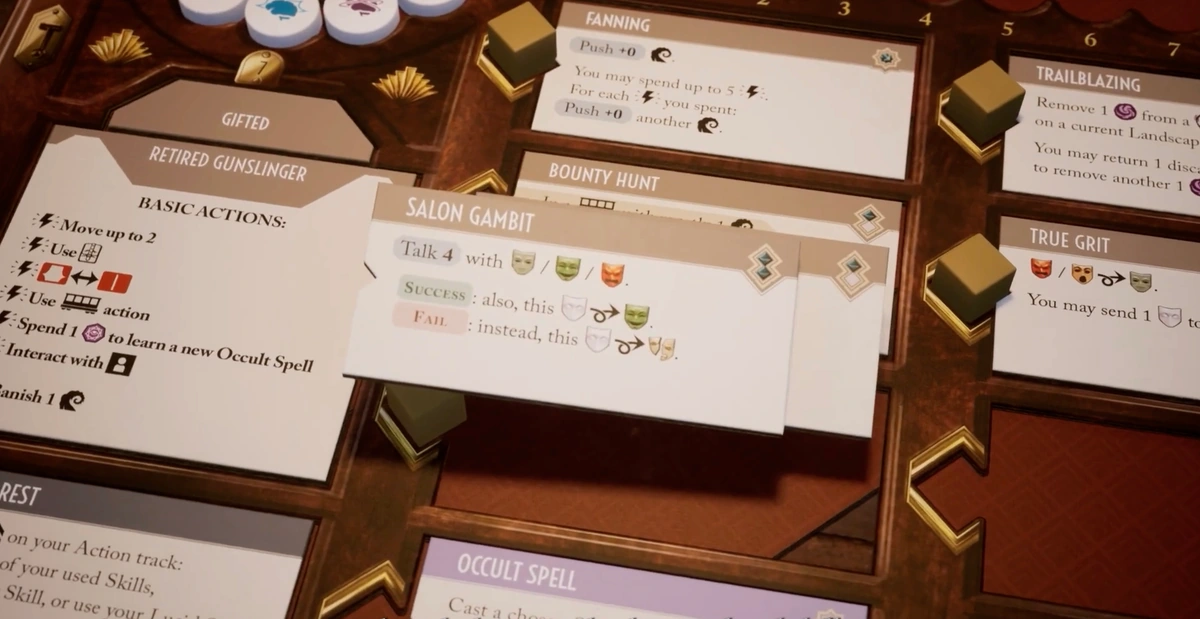
What this journey demands from your gaming table
The train consists of a three-dimensional cardboard locomotive and six carriages. Their compartments organize movement and interactions, while the curtains serve a mechanical purpose: opening or closing them changes how certain threats affect a carriage. This connection between the physical components and the rules helps explain why character positioning matters throughout the journey.
Ordinary passengers are represented by special dice that display their current condition. These are rotated to show whether passengers are calm, injured, angry, terrified, or experiencing other states. The train therefore provides a visual overview of how everyone aboard is coping with the unfolding nightmare.
The game is listed for one to four players, with a playing time of 90–120 minutes and a recommended age of 14+. Solo play is supported, although it’s worth checking the final rulebook for the number of Investigators that need to be controlled, since the system is built around managing multiple characters.
If you’re interested in playing alone, that additional character management is something to consider. It’s also worth allowing time to learn the rules and prepare the game: conversations, resting, events, and the various threats involve quite a few interconnected systems. The advertised playing time is best treated as a guide rather than a guarantee.
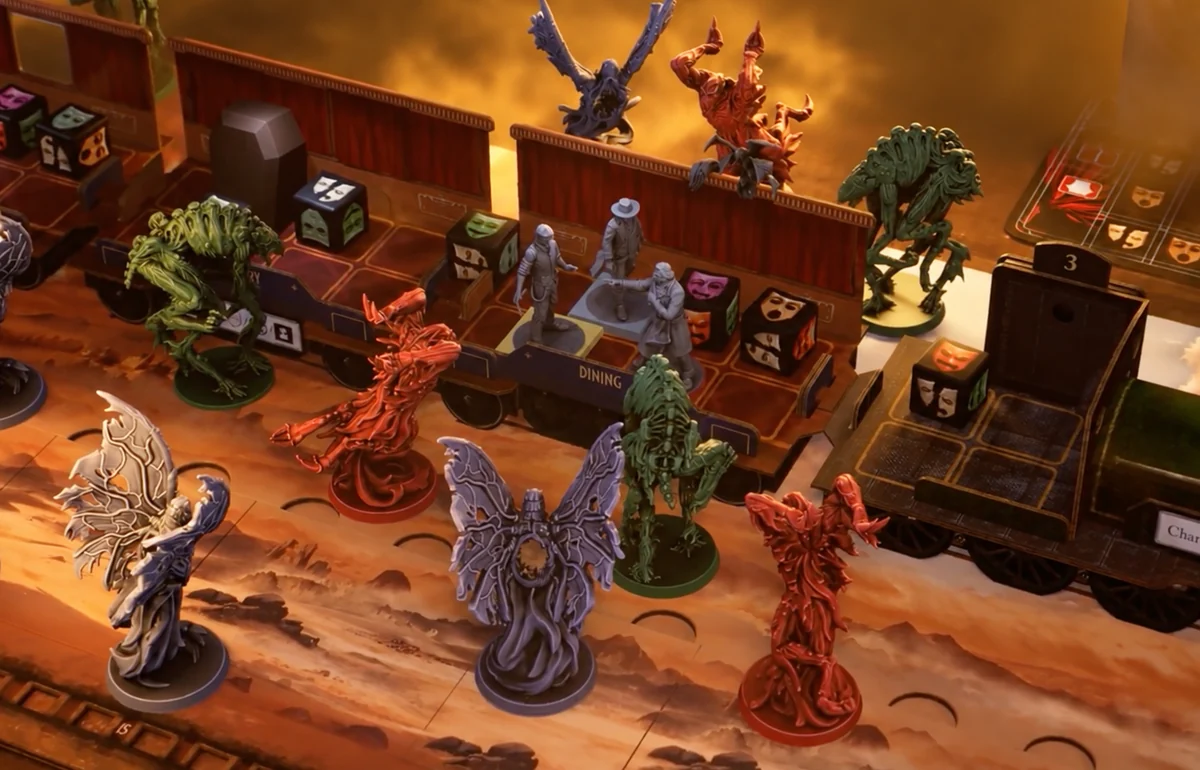
The core game and the different ways to expand the journey
The core box offers self-contained journeys that can be completed in a single session, with clues and other elements arranged differently during setup. It includes Ritual sheets that change the group’s priorities. One ritual might make gathering information more difficult, while another introduces illness among the passengers. Story cards add smaller narratives and consequences to these systems. The variety comes from how these problems combine and the decisions we make to overcome them.
The expansions take different approaches. Consumed by the Void introduces a campaign of five interconnected scenarios, while other boxes expand the cast, change the enemies, or upgrade physical components. When deciding what to add, it’s worth understanding which part of the experience each expansion develops.
| Expansion | What it adds |
|---|---|
| Consumed by the Void Campaign Expansion | A five-scenario connected campaign featuring new components, mechanics, and an evolving narrative. |
| Investigators Unveiled Expansion | Allows characters to be used as playable Investigators or as Suspects. |
| New Monstrosities Expansion | Three additional monster types, each with its own characteristics and challenges. |
| Taste of Luxury Upgrade Box | Additional miniatures representing elements such as portals and clues, along with upgraded components. |
| Fortune Tokens Upgrade Box | Acrylic replacements for cardboard Event and Conversation tokens. |
For the US market, Asmodee USA lists October 30, 2026, as the retail release date for the core game and its major expansions. As of October 28, 2026, that remains the announced date, while availability in other markets may vary. For a first purchase, we think starting with the core game makes sense. It gives a group the opportunity to discover whether they enjoy managing its competing priorities. From there, it becomes easier to decide whether to pursue a connected narrative or introduce more variety into individual journeys.
What it shares with the Call of Cthulhu campaign
The Horror on the Orient Express tabletop roleplaying campaign takes its characters on an investigation from London towards Constantinople, stopping in various cities along the way and including additional adventures that expand the journey. The current English-language edition is available as a two-volume hardcover set, bringing together the extensive campaign originally released in a boxed format. It requires a Keeper to prepare and run the sessions, along with the rules for Call of Cthulhu. This version of the journey leaves room for conversation, exploration, and responding to whatever ideas the players come up with.
The board game focuses instead on the train trapped in the Dreamlands, with threats governed by rules and events. Every session has a defined objective and outcome. The comparison helps distinguish the experiences each format offers: the board game brings deduction and crisis management into a shared session, while the roleplaying campaign requires ongoing commitment and preparation to develop a much more extensive investigation.
They are independent products, and you don’t need the roleplaying books to play the board game. Chaosium explicitly describes this adaptation as spoiler-free regarding the original campaign. For anyone who has yet to experience that legendary adventure, the board game offers another way to explore its atmosphere. The passengers and the train’s windows retain their ability to suggest stories, even though each format uses very different tools to bring those stories to life.
Our thoughts
What appeals to us most about Horror on the Orient Express: The Board Game is how gathering information competes for our time with keeping everyone else safe. The rules suggest decisions with plenty of character: abandoning an investigation to help some passengers, accepting assistance from someone we still don’t trust, or choosing to Rest while knowing the train will continue moving. That combination could be particularly interesting for groups that enjoy discussing priorities and gradually understanding how several systems interact. How well everything works together, and the pace it creates, will ultimately need to be judged through actual play.
We’re curious to discover what conversations this train will leave behind once the game is packed away. Perhaps we’ll remember a particularly clever deduction, or the passenger we managed to keep alive while everything fell apart in the next carriage. The setting offers a promising foundation for turning a session into a small shared story: a group of people who boarded the same train and had to decide, together, how to make it to the end.