Living gates? Meet the Gate Gargants that shield Cities of Sigmar
Some units are built to hit hard; others are built to hold the line. Gate Gargants belong firmly in that second category, though when the leash finally comes off, the blow they deliver more than makes up for the wait.
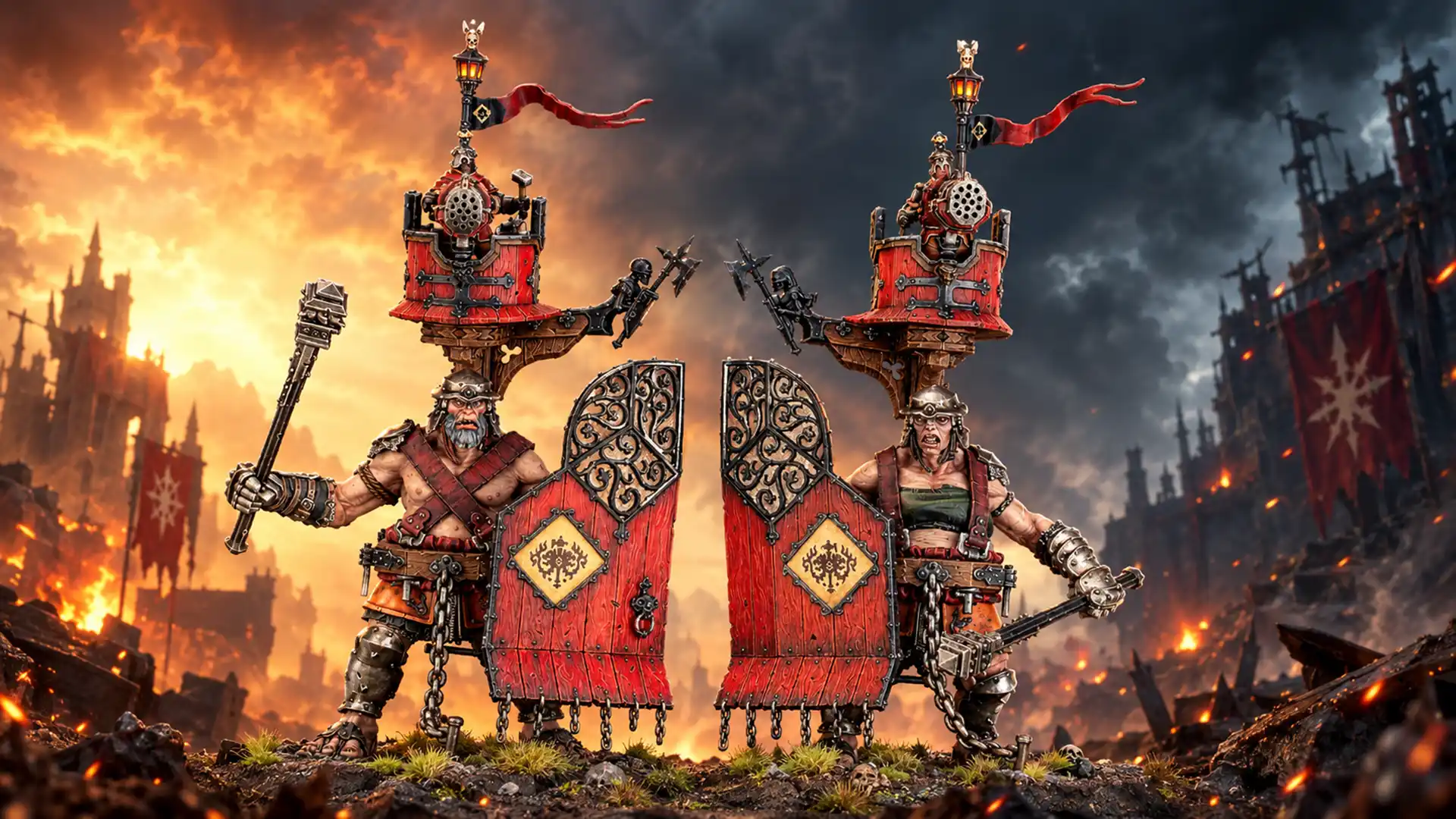
Within Castelite formations, these two city-gargants fulfil a role that is as simple to explain as it is spectacular to picture: they are the gate of a fortress, only made of flesh, bone, and a great deal of contained bad temper.
A fortress with a name
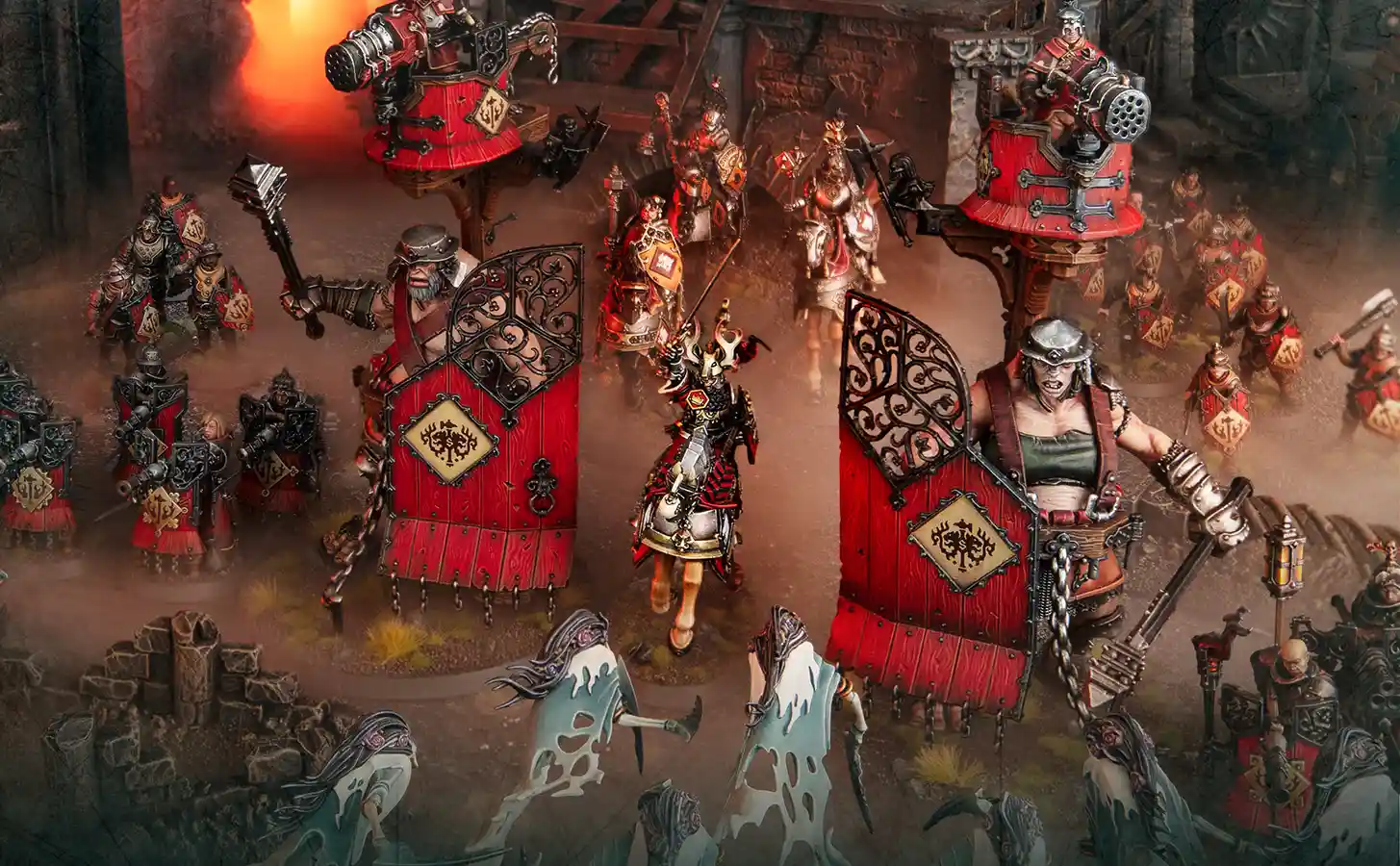
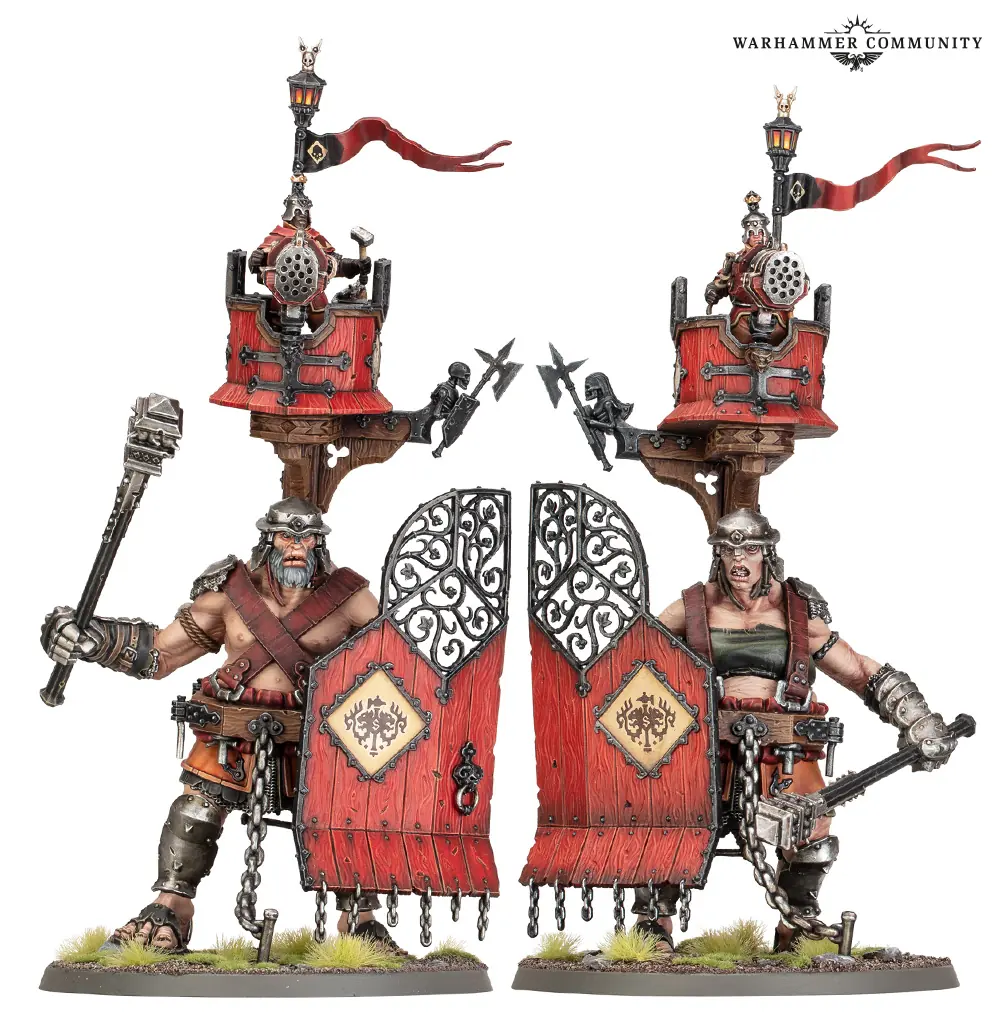
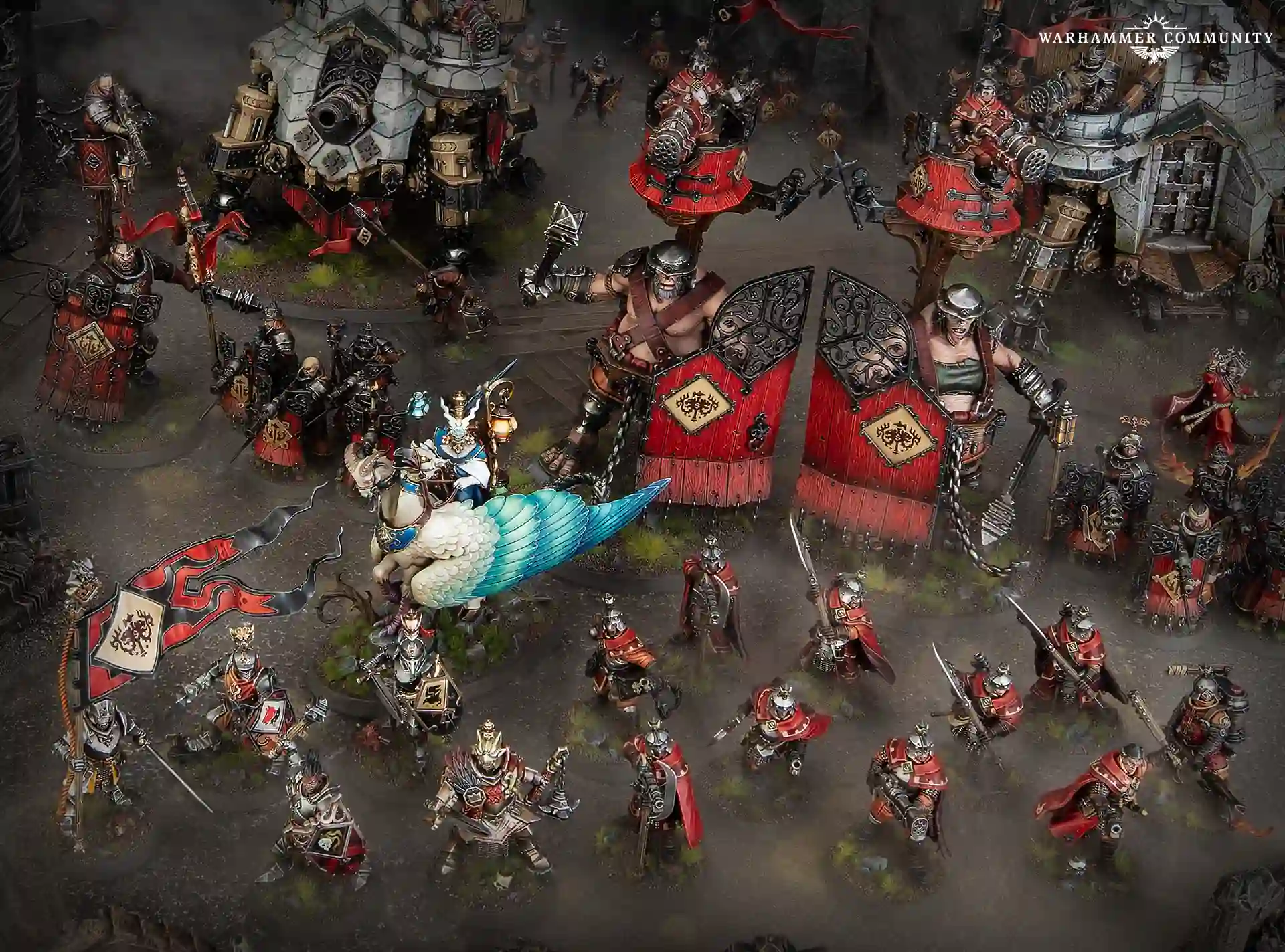
If you have ever seen a Castelite formation fully deployed, you will know the image looks more like a castle on legs than a conventional army. The Gate Gargants are, quite literally, the entrance to that fortress: two gargants placed shoulder to shoulder, each holding half of a colossal bulwark shield that, when joined together, becomes almost impossible to breach.
An enemy who decides to charge this slab of reinforced timber does not achieve much beyond becoming the next target for the gargants’ mauls. That is where things get interesting, because striking that living wall without restraint usually ends with broken bones and casualties that could have been avoided.
We cannot help picturing the scene from the point of view of some poor wretch on the enemy side, watching that wall of wood and muscle bear down on them without flinching. It cannot be a good day for anyone on the other side.
From savages to citizens: domesticating a titan
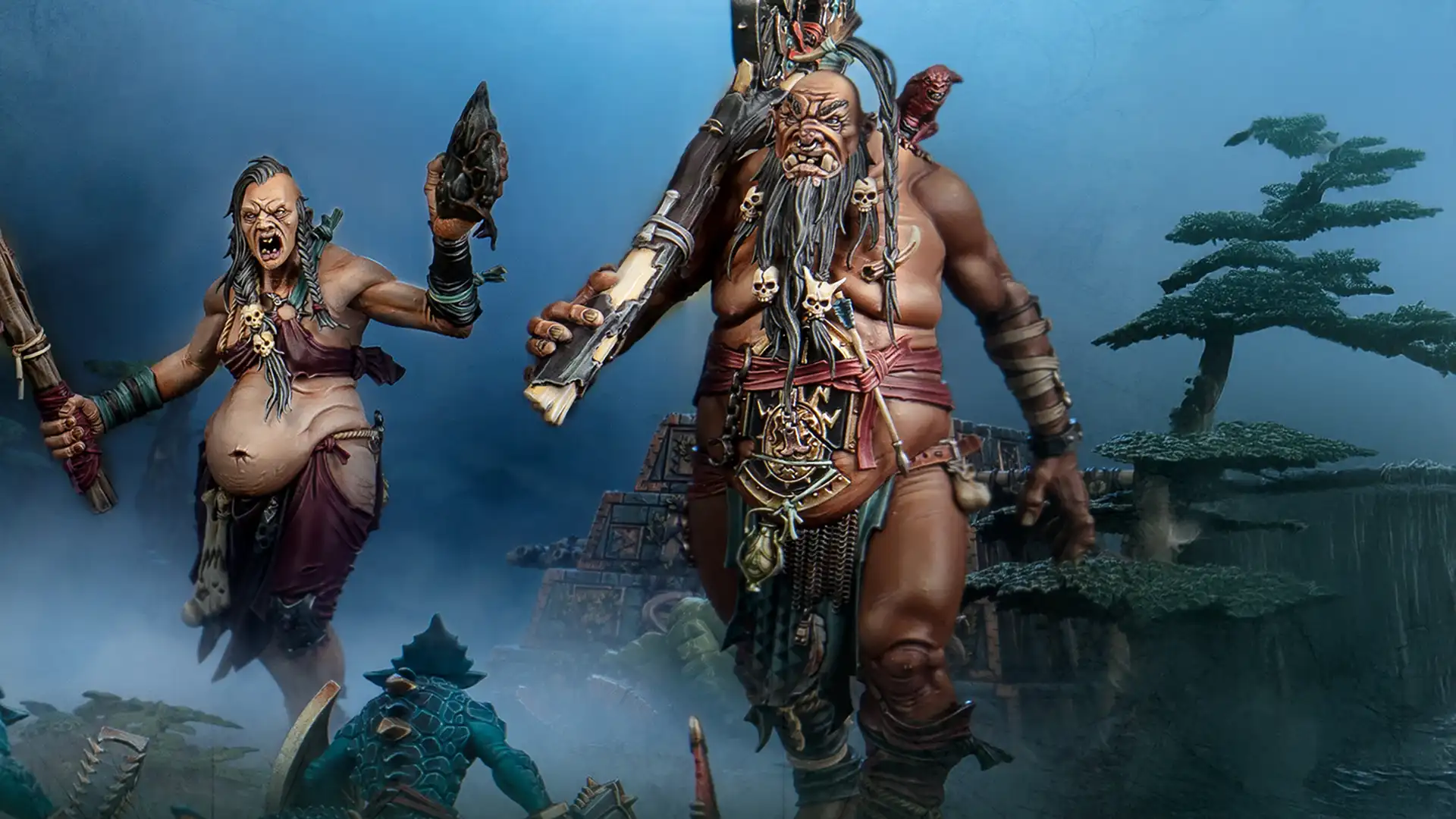
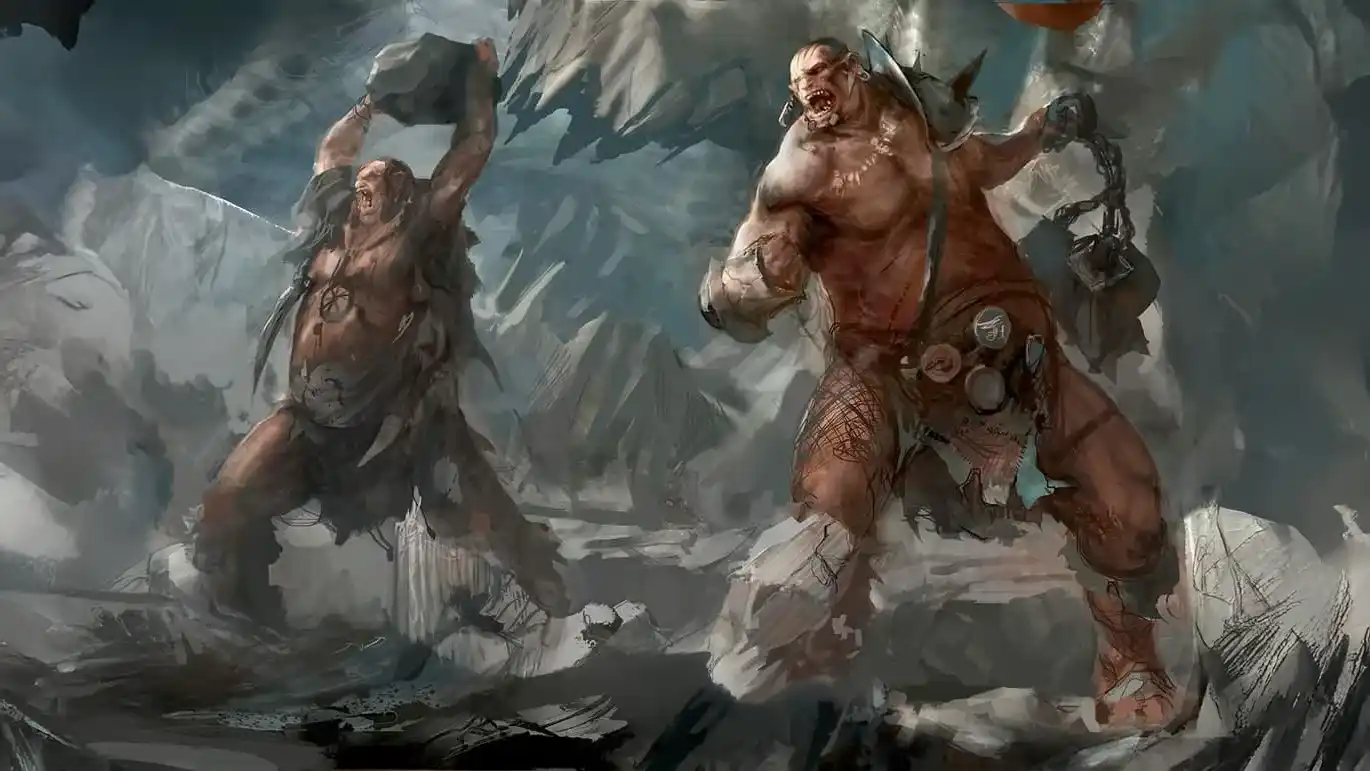
What is curious about these city-gargants is that they do not fit the image we usually have of these creatures. Their wild kin, in fact, look on them with genuine contempt for having adopted habits so unbecoming of a gargant: they work for food instead of rampaging through whatever livestock they find, they build walls instead of tearing them down, and, to cap it all, they have ended up worshipping Sigmar.
That process of adaptation has not erased their destructive nature entirely; it has simply redirected it. The result is a logistical ally of incalculable value to Dawnbringer armies, since a single city-gargant can carry as much Ironweld equipment or machinery as half a dozen steam transports combined.
It is a detail that we find revealing about how Cities of Sigmar understand civilisation: the goal is not to eliminate the wild, but to find a useful place for it within society.
Chosen for size, trained by force
Not just any gargant is suited to this role. Those selected as Gate Gargants are chosen for their size and, above all, for their stoicism, because the task entrusted to them is anything but simple: they must endure the enemy’s fiercest attacks while remaining completely motionless, unless ordered otherwise.
The problem is that a gargant’s natural reaction to a painful wound is usually an uncontrolled tantrum that only ends when whoever caused it has been reduced to a smear on the ground. That instinct has to be suppressed through training, whether by bribery or considerably more forceful methods, because if the gate gives way, the entire Castelite formation is left exposed and weakened.
We especially like this idea because it humanises these giants in an unexpected way: they are not simply war machines, but creatures with a real temperament that has to be kept in check, almost like training an enormous, temperamental animal that remains dangerous all the same.
The Grenadier-Major: the little one who steers the giant
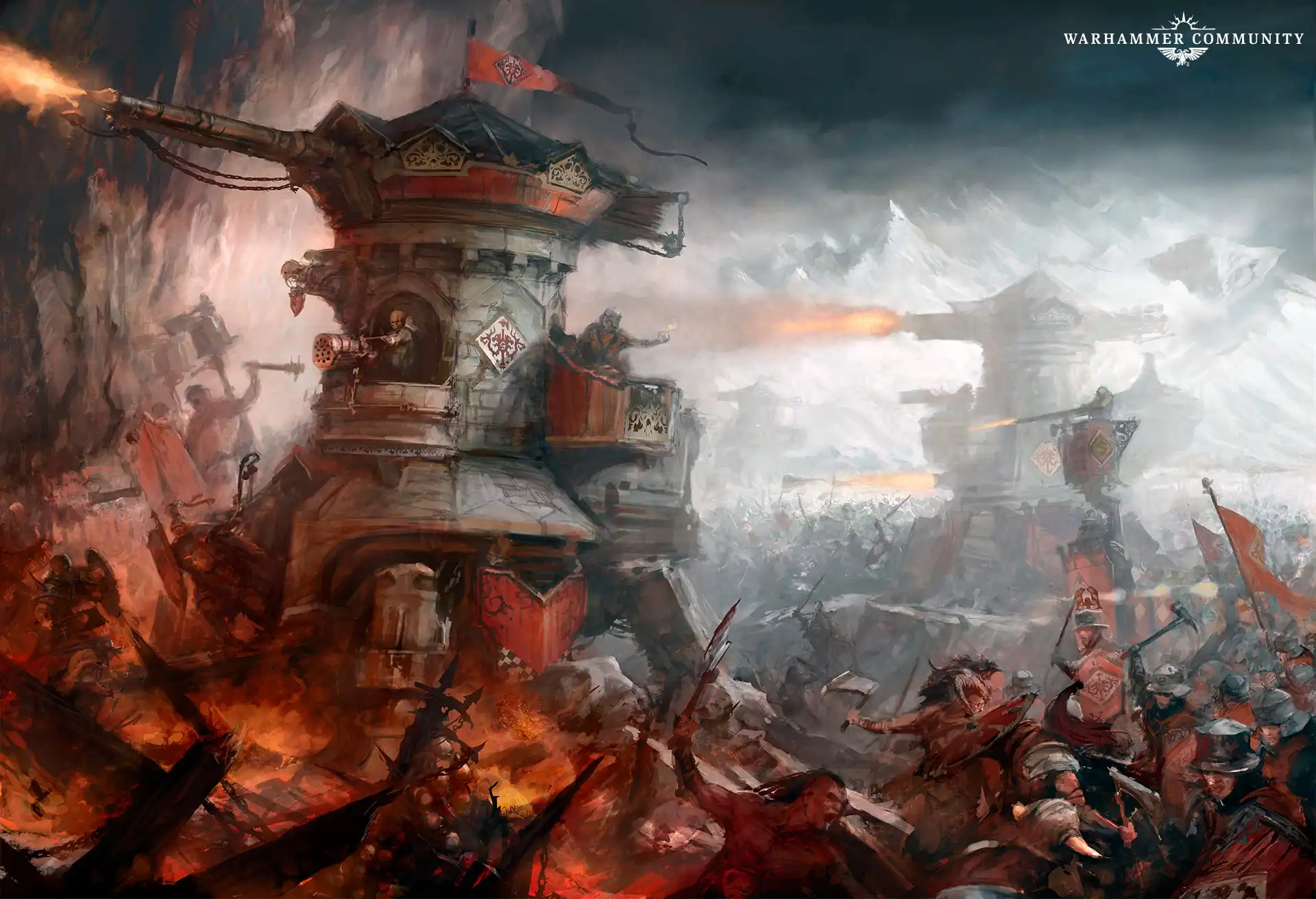
No Gate Gargant enters battle alone. Each one carries a Grenadier-Major perched in a howdah strapped to its back, reminiscent of an enlarged version of the mobile watchtowers used by Ogor Warhulks. Their role is twofold: keep the giant in line and sow panic among anyone bold enough to get too close.
For the second part, they rely on a peculiar rotating cannon, something like a pepper pot tipped on its side with several barrels capable of unleashing a volley of shot across a small area. Those caught in that burst end up as little more than a pink cloud, a spectacle that, apparently, hugely entertains the gargants below.
From their elevated position, the Grenadier-Major also plays a crucial tactical role: they are best placed to read how the battle is unfolding and decide the exact moment when the gate must open.
When the gate opens: from defence to all-out attack
This is where all that accumulated patience explodes at once. The opening of the gate is the signal for the Castelite formation to abandon its static posture and go on the assault, and through that freshly opened gap come elite knights, heavy infantry, and even armoured riders on their warhorses.
These units crash into an enemy who, until that moment, had been hammering uselessly against a wall. The surprise effect is brutal, because defence turns into offence practically without transition.
And of course, the Gate Gargants themselves, finally freed from their stationary role, advance swinging their weapons between laughter and howls, dealing out blows left and right. If you ever had doubts about whether it was worth waiting so long crouched behind a shield, this is the answer.
Saint Templesen: the legend the gargants themselves do not quite believe
Beyond the rules and military background, there is a small story fragment that we think is perfect for understanding the tone with which Games Workshop treats these characters. A priest tries to convince a group of sullen, wounded gargants of the virtues of Saint Templesen, a gargant who learned temperance, humility, and grace through the light of Sigmar.
The gargants’ response, far from any solemnity, is pure indifference until the priest changes tack and tells them how Templesen clobbered the grave-drake Kazzimozan, then used the creature’s spine to kill the Wight-General of Taryxus. Only then does he have their full attention.
It is a small detail, but it says a lot about how Games Workshop is building this faction: faith and civilisation coexist with a taste for the most direct kind of violence, and both end up fitting together without feeling contradictory.
Our take
The Gate Gargants strike us as one of those concepts that work as well on paper as they probably will on the tabletop. The idea of turning two gigantic creatures into literally the gate of a fortress has that visual spectacle that so defines Age of Sigmar, and the moment when the gate opens and releases both the gargants and the elite troops promises to be one you remember long after the game.
We especially like how the background of these city-gargants has been handled. They are not simply new miniatures, but a reflection on what it really means to domesticate something wild without destroying its nature entirely. That balance between discipline and contained violence is among the most interesting things we have seen from Cities of Sigmar lately.
If you are as passionate about lore as we are, this unit has all the ingredients to become one of those pieces that inspire a thousand stories on the table: the tension of holding the first charge, the exact instant when you decide to open the gate, and the chaos that follows. We, for one, cannot wait to see a Gate Gargant cause havoc in our next game.